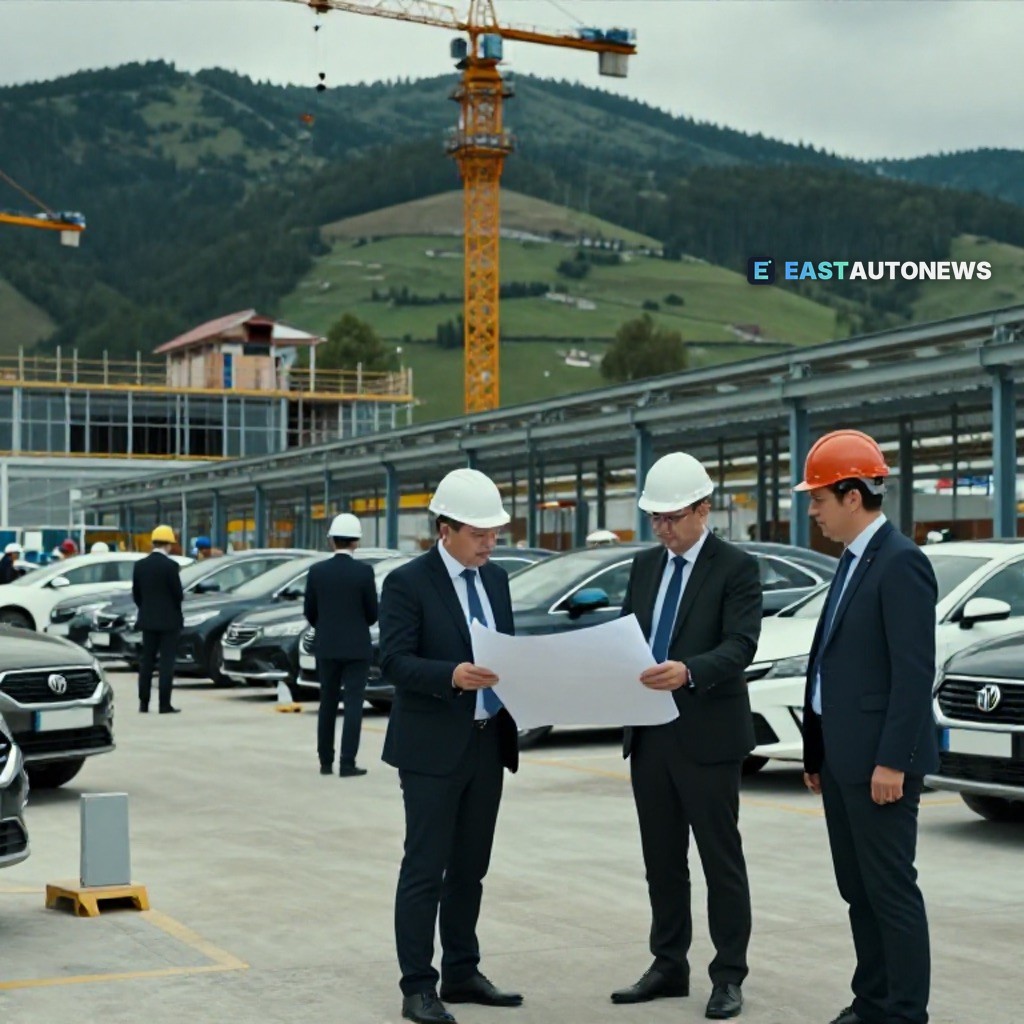
Hyundai Motor Group has held talks with the Slovak government on a medium-term investment plan that would channel €994 million (about 1.45 trillion won) into the country by 2030, South Korea's Global Economic reports. The two sides also discussed joint measures to respond to the European Union's Industrial Acceleration Act (IAA), underlining Bratislava's drive to keep Korean automotive capital flowing into Central Europe at a moment of upheaval for the region's car industry.
A near-€1-billion commitment stretching to 2030 would hand Slovakia a long planning horizon precisely while several established manufacturers are trimming output elsewhere on the continent. It also illustrates how global carmakers are pairing investment pledges with regulatory alignment inside the EU, turning industrial policy from a compliance burden into a strategic asset in site negotiations.
The counterpoint comes from Stellantis, which is preparing additional manufacturing shutdowns across its European assembly plants over the coming weeks to counter sluggish market demand and intensifying competition, according to a report by Just Auto. The group aims to mitigate its excess European capacity without resorting to permanent plant closures, while expanding ties with China's Leapmotor and Dongfeng Motor — production discipline on one track, deeper Asian partnerships on the other.
Bulgaria, meanwhile, continues to pull in fresh automotive capital. In Kardzhali, a production base worth 5 million and 50 new jobs is in the works, with Standart News reporting that automation and the expansion of manufacturing capacity in the car sector keep attracting new money to the country. The broader picture is stronger still: foreign investment in Bulgaria has jumped, and large international companies are exploring production opportunities in automobiles, space technologies, medical equipment and energy, according to Blitz.
Taken together, the week's headlines sketch an industry redistributing its bets. Korean capital is being courted in Slovakia, Chinese partnerships are helping a legacy giant manage an overhang of European capacity, and Balkan supply chains are quietly expanding — evidence that Eastern Europe can still land headline commitments even as incumbents idle lines further west.
For dealers and private buyers, these swings in production and investment are a reminder that availability and pricing can differ sharply from one European market to the next — and that comparing offers pays off. Readers looking for a vehicle can find sensational cars at sensational conditions at WorldTrader24, Europe's marketplace with over 70,000 vehicles, where freshly built models and attractively priced stock sit side by side.