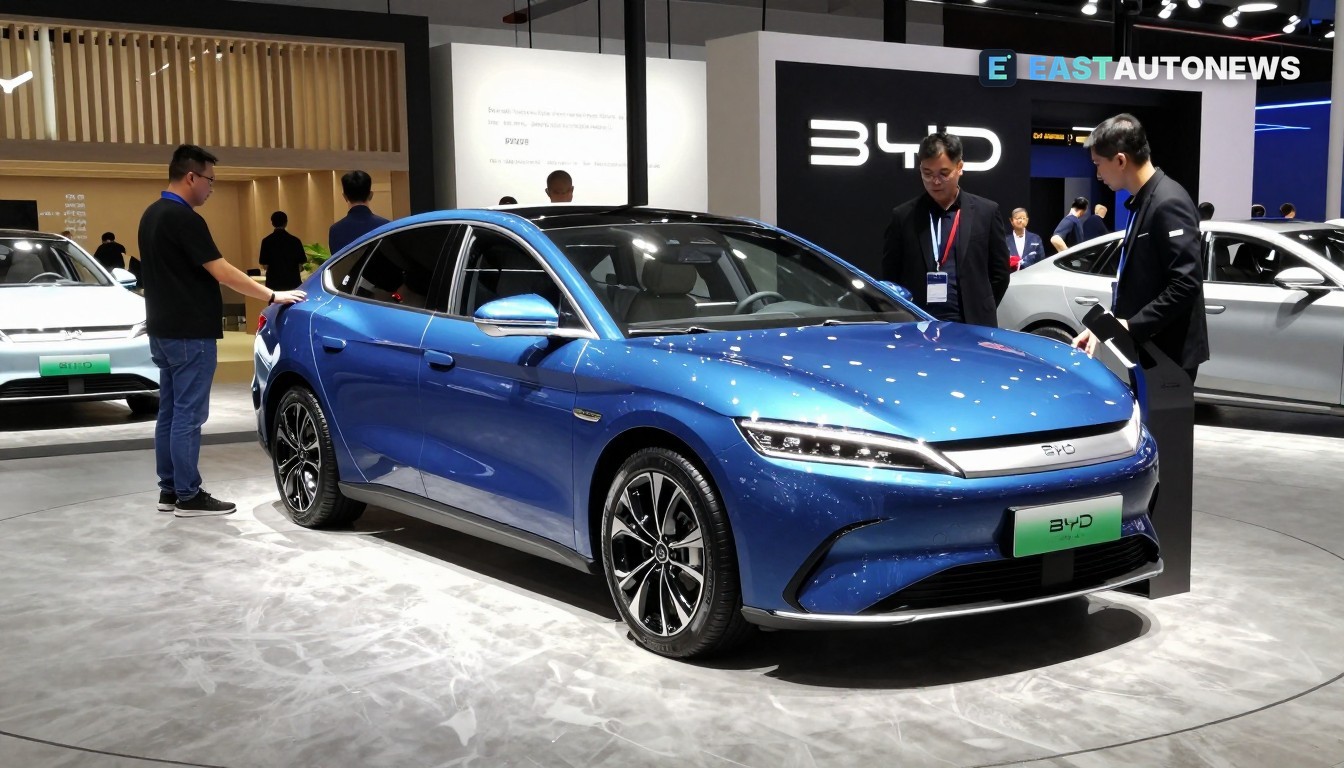
Chinese carmaker BYD has placed Spain on a shortlist of locations for a potential third European factory and told attendees at the Paris motor show that it plans to install 3,000 electric‑vehicle chargers across Europe by the end of 2027. The short‑listing and the charging target were reported by Spanish press on 12–13 November 2026.
What BYD said at the Paris show
BYD Executive Vice‑President Stella Li confirmed Spain is “among the pre‑selected countries” but said there is no final decision, no timetable and no committed investment yet. Li told journalists the company is weighing both buying an existing plant and building a new facility from scratch. She emphasised that the decisive factor will be energy costs: “The first thing we are analysing is the cost of energy. Our number‑one priority is a competitive energy cost,” she said.
The same reporting added that BYD wants to work with strategic partners on its charging roll‑out and that the 3,000‑charger target focuses on Europe, to be reached by the end of 2027. The announcement did not include a breakdown of charger types, locations or the likely split between public, depot and destination chargers.
What this means for the market
For Central and Eastern Europe the development is a double‑edged signal. A third BYD factory in Europe would add capacity and strengthen local supplier opportunities where it locates, but the company’s statement that energy cost is the top criterion shows industrial decisions will be driven by grid prices and ready access to high‑capacity connections — factors that vary widely across European regions. BYD’s explicit aim to localise production is also tied to reducing exposure to EU import tariffs on Chinese‑built EVs, a point raised by Spanish reporting.
Separately, a 3,000‑charger deployment across Europe by the end of 2027 would create a sizeable procurement pipeline for charge‑point operators, hardware suppliers and grid connection contractors. That scale matters for CEE suppliers and installers that can offer fast‑charging hardware, civil works and local grid liaison services — provided they can meet the technical and timing requirements BYD and its partners will set. The company did not publish the specification or planned geography for the chargers when the announcements were reported.
Neither of the published reports gave investment figures, firm dates for a site decision, or full technical details on the charging hardware. BYD’s statements reported at the Paris show remain indicative rather than contractual commitments, and the company said it is open to different industrial solutions.
Electric vehicles on WorldTrader24 →
Sources: Merca2, EVNews (reporting Expansión/ad‑hoc‑news).