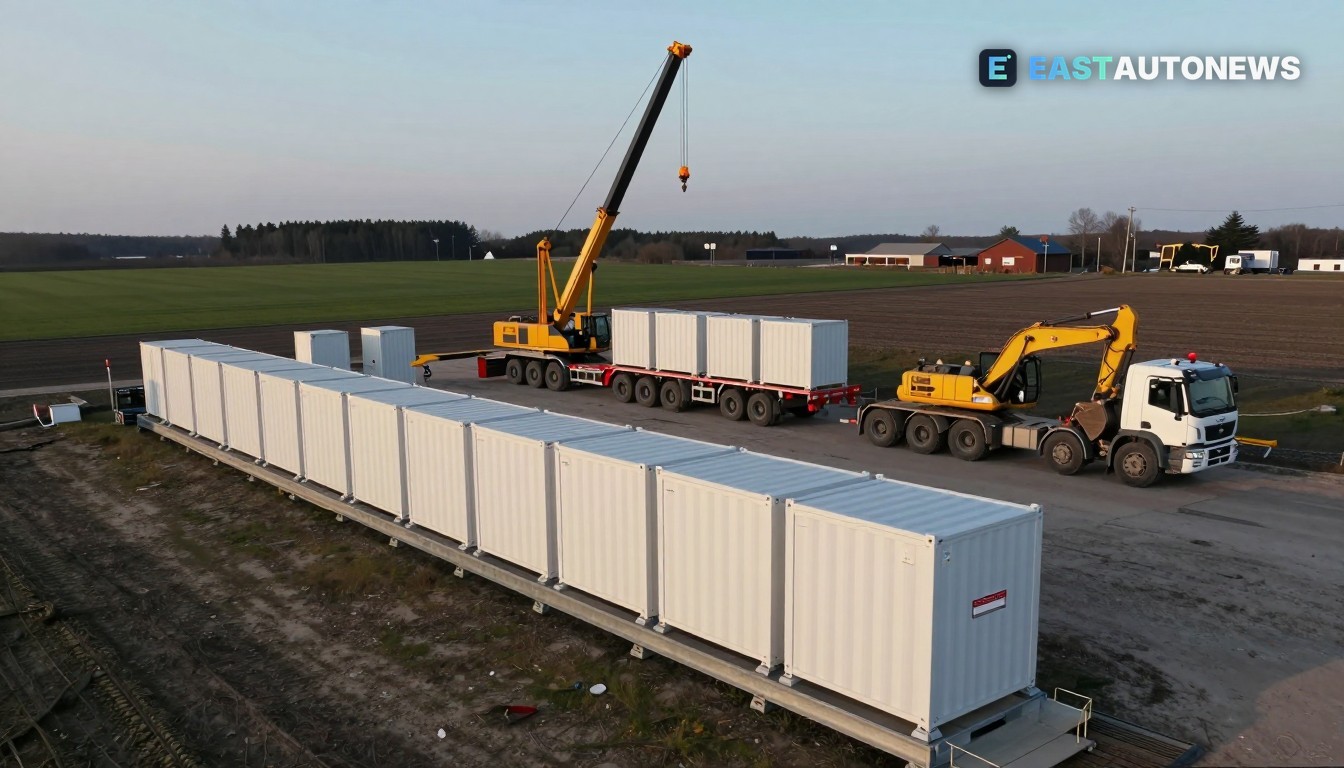
Actis has bolstered its newly launched Polish renewables platform by adding two large battery energy storage system (BESS) projects with a combined capacity of 244 MW and 1,141 MWh of storage. The portfolio, acquired from DRI, comprises a 112 MW / 518 MWh site at Kozienice (already acquired and ready for construction) and a 132 MW / 623 MWh project at Trzebinia (signed and to transfer once operational). The legal adviser on the transaction was Clifford Chance, which published details on 10 November 2026.
The deal and the contracts behind it
Actis says both Kozienice and Trzebinia “benefit from a secured revenue base through a 17‑year inflation‑indexed capacity market contract”, a structure the firm argues will underpin long‑term cashflows and make utility‑scale BESS financable in Poland’s transitioning power mix. Jaroslava Korpanec, Head of CEE at Actis, said the projects will “help build the grid flexibility required” as Poland shifts from coal to renewables.
Clifford Chance’s Warsaw office confirmed its team advised Actis on the acquisition and described the portfolio as totalling 244 MW / 1,141 MWh, with the Kozienice asset ready for construction and Trzebinia completing on commissioning. The law firm’s announcement was posted on 10 November 2026.
What this means for the market
Utility‑scale BESS of this scale is one of the first to reach commercial‑scale readiness in Poland and comes as industrial and transport electrification push electricity demand higher. Actis and other investors argue such long‑duration storage is essential to integrate more wind and solar while guaranteeing supply for high‑power uses — from public DC fast‑charging hubs to manufacturing plants that need stable power for EV assembly and battery fabrication.
For Central and Eastern European carmakers and suppliers, the move reduces one source of risk: intermittent renewables and constrained grids have forced some firms to limit EV‑charging deployment or pay for expensive grid upgrades. Large BESS sites can smooth peaks, support local distribution networks and enable high‑power charging clusters near logistics hubs and factories without immediate, costly grid reinforcement. Actis highlights Poland’s expected structural shift in generation and rising demand as the investment case.
The transaction also signals growing institutional investor appetite for Polish grid flexibility assets. That trend has parallels elsewhere in the region — smaller standalone BESS projects are moving from planning to construction — such as Volta Polska’s 6 MW / 15 MWh Połaniec site, where site infrastructure was completed and batteries are due for delivery ahead of commissioning targeted in Q1 2027. Such projects, while smaller, point to accelerating local deployment across Poland.
Operationally, the Kozienice project is already described by Actis as ready for construction; Trzebinia will transfer when it is operational. Together these assets provide multi‑hour duration storage (four hours plus) that system operators and large electricity consumers prize for peak shifting and wholesale market participation — services that can lower the effective cost of electricity for energy‑intensive automotive plants and charging operators.
WorldTrader24 B2B vehicle marketplace for dealers and fleets →
Sources: Actis, Clifford Chance, Volta Polska