Tesla started rolling out firmware 2026.44.1 on 17 November 2026, and the update’s headline item for drivers is a new Charger Network View for the in‑car navigation map. The release notes — published for the build on 17 November — say: “Charger pins on the map now cluster at normal zoom levels, showing network coverage as you zoom out.” (Not a Tesla App, 17 November 2026).
What Tesla changed
The 2026.44.1 release, first observed on 17 November 2026, bundles a redesigned Service menu and several supervised‑driving and safety items, but its singular new public note is Charger Network View. Tracker sites and firmware researchers report the build reached Europe early in the rollout: of the first 100 cars TeslaFi logged on the build by 14:00 UTC on 17 November, 81 were in Europe and most updated from a European build, according to TeslAnt (17 November 2026).
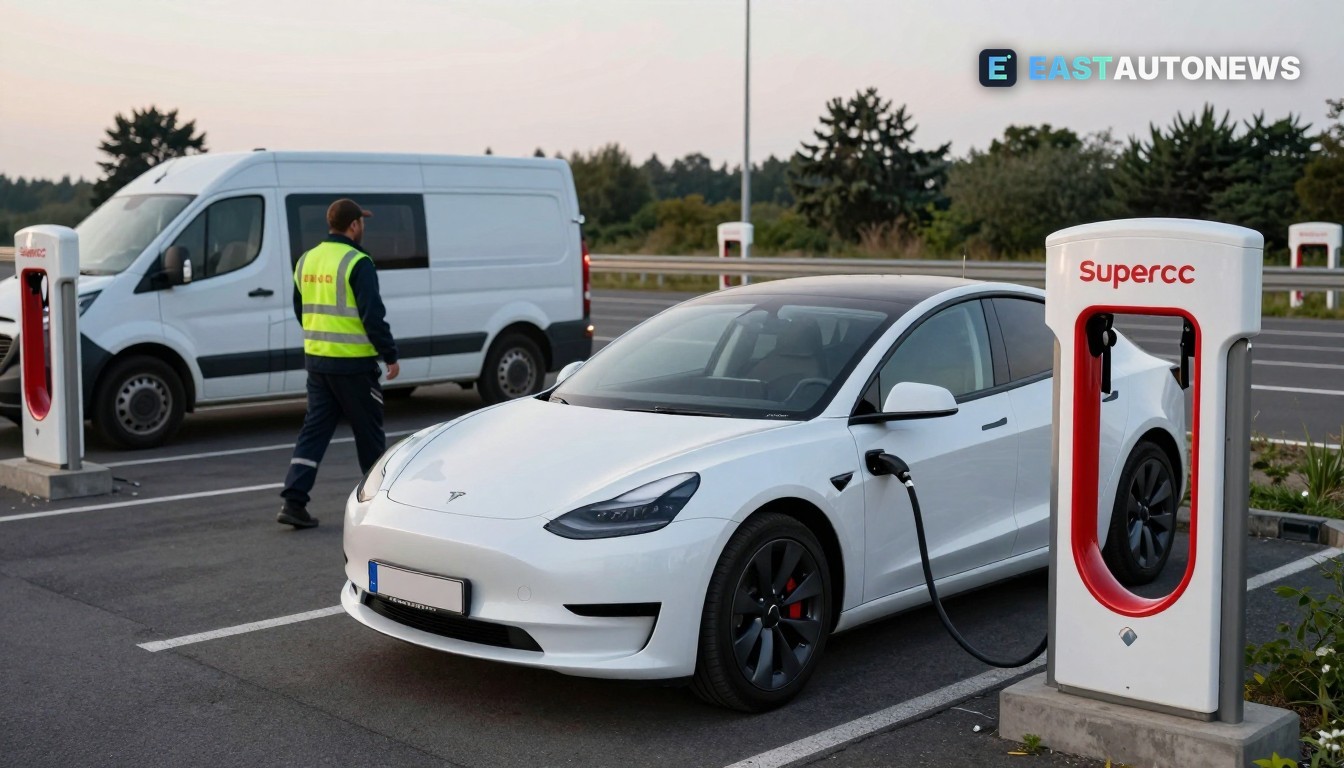
The new map behaviour clusters nearby Supercharger locations into a single pin and number when the driver is zoomed out, with individual stations revealed as the map is zoomed in. Volt’s tracker of the release lists Charger Network View as a worldwide‑labelled item in the 2026.44.1 notes and shows the firmware being observed in European countries that include Hungary and Poland (Volt, 17 November 2026).
What developers found in the code
Beyond the visible map change, researchers who inspected the firmware reported references in the code to additional charging‑related features that Tesla has not formally announced. TeslAnt and tracker researchers flagged code strings for charging‑price notifications, a major‑roads navigation option and Grok chat history on the phone; these are present in the build but not listed as release notes items, and Tesla has not confirmed availability of those features (TeslAnt, 17 November 2026).
What this means for the market
The change is small technically but matters operationally in Central and Eastern Europe because map presentation affects driver behaviour and charger utilisation. For Tesla owners the clustered view reduces map clutter on long runs and makes network density clearer at a glance — useful in corridors where Superchargers, public DC fast chargers and national networks compete for traffic. For charging operators and third‑party networks the update highlights how much influence vehicle software exerts over which stations drivers notice and choose.
For fleet managers and operators in CEE, a clearer in‑car overview can speed route planning and reduce range‑anxiety‑driven detours to congested sites. Meanwhile, the firmware’s code hints (charging‑price notifications) suggest Tesla is preparing to show dynamic price information inside the car — a direct commercial interface that could change how operators present pricing and promotions to drivers.
All quoted figures and dates above are taken from the 2026.44.1 tracker and reporting. Tesla’s own rollout practice means features and their country availability will depend on vehicle model, hardware and local approvals; check the Software release notes in a vehicle to confirm what is available on a given car (Volt, Not a Tesla App, TeslAnt, 17 November 2026).
Electric vehicle listings on WorldTrader24 →
Sources: Not a Tesla App, Volt, TeslAnt