Lloyd’s Register has published a new special‑feature notation called FIRE (EV), formally announced on 17 November 2026, that sets ship‑design requirements specifically to limit the spread of electric‑vehicle (EV) battery fires on pure car & truck carriers (PCTCs), RoRo and RoPax vessels. The notation gathers design rules on early detection, structural fire protection, ventilation, water‑based suppression and firefighting arrangements and sits in LR’s July 2026 Rules and Regulations (Chapter 6, Part 6).
What FIRE (EV) requires
FIRE (EV) focuses on containing a fire to the vehicle space where it starts by improving detection and strengthening structural and ventilation measures, plus specifying suppression and firefighting equipment that are better suited to lithium‑ion battery incidents. Lloyd’s Register notes that EV batteries can enter thermal runaway and produce gases and fire behaviour that differ from conventional vehicle fires, making design‑stage mitigation necessary. Gabriele Sancin, LR’s Fire & Safety team lead for specialist vessels, underlined that lithium‑ion batteries present “specific fire risks that need to be considered from the design stage.”
The notation is voluntary — a classification standard owners can build to — but it arrives against a background of recent, costly car‑carrier incidents: Felicity Ace (Feb–Mar 2022), Fremantle Highway (July 2023) and Morning Midas (June 2025), each losing thousands of vehicles and hundreds of millions in cargo value, which helped prompt the industry push for EV‑specific design rules.
What this means for the market
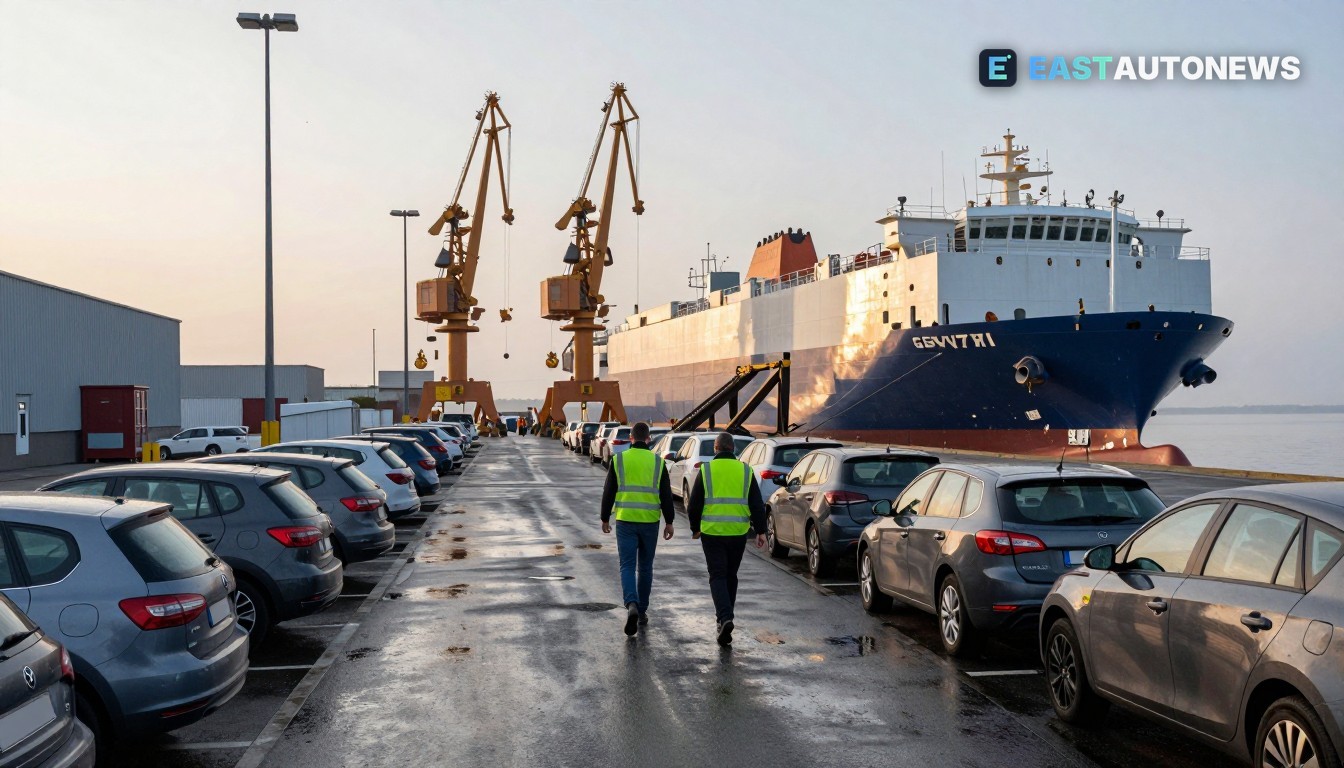
For Central and Eastern Europe the issue is practical: finished vehicles for CEE markets (and cars built in the region for export) move by car carrier and RoRo services through ports such as Gdynia, Rijeka and Koper, where dedicated vehicle terminals and RoRo services handle new‑car imports and exports. Any change that affects how PCTCs are built, insured or certified will ripple through freight costs, port handling rules and insurers’ risk assessments for vehicle cargo.
Two immediate market effects to watch are (1) newbuild and retrofit costs for shipowners choosing the FIRE (EV) notation, which could push charter rates higher for EV‑heavy sailings, and (2) shipowners’ and insurers’ appetite to adopt the notation ahead of mandatory IMO rules. The International Maritime Organization’s workstream on vehicle‑space fire protection remains ongoing: interim guidelines and correspondence group work were prioritised at SSE 12 in March 2026, and goal‑based SOLAS amendments stemming from that work are not expected to enter into force before 1 January 2032 at the earliest — leaving LR’s notation as an early industry standard for several years.
For OEMs and logistics planners in the CEE supply chain the practical questions are concrete: will charter costs rise for Asia–Europe or transatlantic PCTC sailings carrying growing volumes of Chinese and Korean EV exports; will ports need additional pier‑side firefighting and inspection rules for EV shipments; and will manufacturers alter shipment patterns (more short‑sea, more rail) to avoid higher premiums or to manage dwell‑time risk? Those are commercial decisions now being influenced by a technical change in how ships are designed, not by law.
LR’s FIRE (EV) is the first ship‑design notation targeted specifically at EV cargo risks; whether it becomes an industry norm for new PCTCs — and how fast owners retrofit existing tonnage or change routing to ports with stronger shore‑side emergency capacity — will determine the near‑term commercial impact on Central and Eastern Europe’s vehicle flows.
B2B vehicle marketplace for dealers on WorldTrader24 →
Sources: Lloyd's Register / EVThrottle / RoRoSAFE