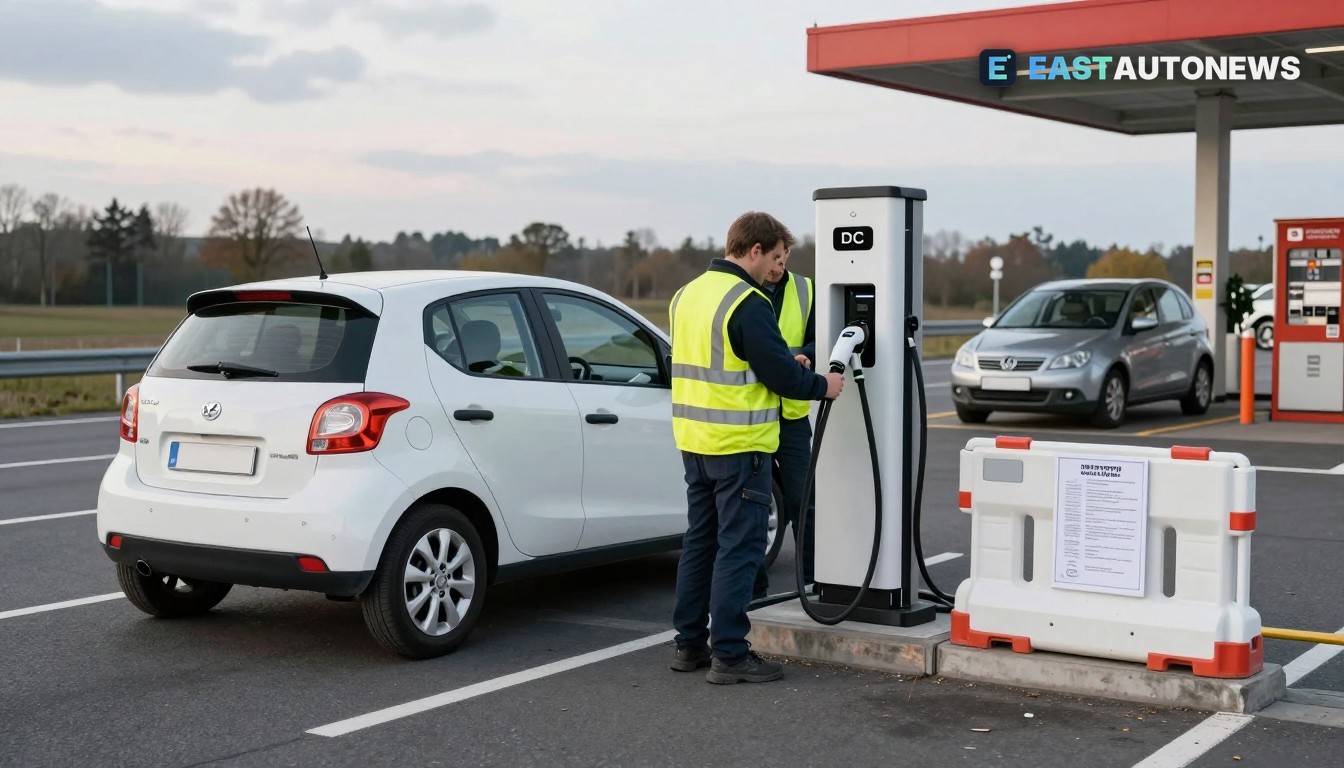
On 18 November 2026 negotiators from the European Parliament and the Council reached a provisional political agreement to accelerate permitting for electricity grids, renewable projects, energy storage and electric‑vehicle recharging stations. The deal is part of the Commission’s wider “European grids” package and aims to shorten approval times that have delayed infrastructure projects across the EU for years.
Agreement highlights
Under the provisional text, permit procedures for stand‑alone recharging stations and stand‑alone storage would be capped at six months. Solar equipment and co‑located storage would face a shorter three‑month decision window, and grid‑connection deadlines are set at three months (extendable to six months in justified cases). The Parliament also secured a raise in the small‑project threshold for permits from 100 kW to 200 kW, and the text exempts installations on “artificial structures” up to 1 MW from administrative permit requirements.
Other technical and procedural changes include a requirement for single national digital permitting portals, tighter deadlines for environmental assessments, and a lowered threshold for mandatory benefit‑sharing with local communities (from 10 MW to 7 MW). The provisional agreement must still clear committee and plenary votes in Parliament and be formally endorsed by the Council before becoming law.
What this means for the market
For Central and Eastern Europe — a major manufacturing hub for electrified vehicles and a region where public charging networks lag behind sales growth — the measure could remove one of the biggest administrative bottlenecks to rapid charger deployment. Shorter permit windows and clearer digital processes should reduce project risk for charge‑point operators and site hosts such as motorway service areas, shopping centres and logistics hubs. That matters for OEMs and suppliers in CEE because better public and high‑power charging access reduces a key barrier to EV adoption and supports the supply chain for EV production.
However, the directive is procedural rather than prescriptive: it speeds approval timelines and raises thresholds but does not itself mandate numbers of new chargers or alter grid‑capacity planning. National transposition — the moment when member states translate EU rules into local law and practice — will determine how quickly operators can convert the new rules into real sites on the ground. The provisional agreement gives member states roughly 18 months to transpose the directive, according to the co‑legislators’ background documents.
MEP Niels Fuglsang, Parliament’s lead negotiator, welcomed the pact, saying: “I am proud of this result, it shows Europe at its best.” ITRE committee chair Borys Budka underlined the practical need for speed, noting that “procedures take too long, and decisions are issued too slowly.” The Irish presidency framed the outcome as completing the permitting half of the grids package.
For CEE governments and investors the task now is to align national permitting authorities, grid‑operators and local planning rules so the new EU‑level deadlines translate into more operational high‑power and destination chargers — especially at cross‑border corridors and near assembly plants where logistics and worker charging are increasingly important.
WorldTrader24 electric vehicles and chargers listings →
Sources: European Parliament press release, ChargerFeed, pv‑magazine