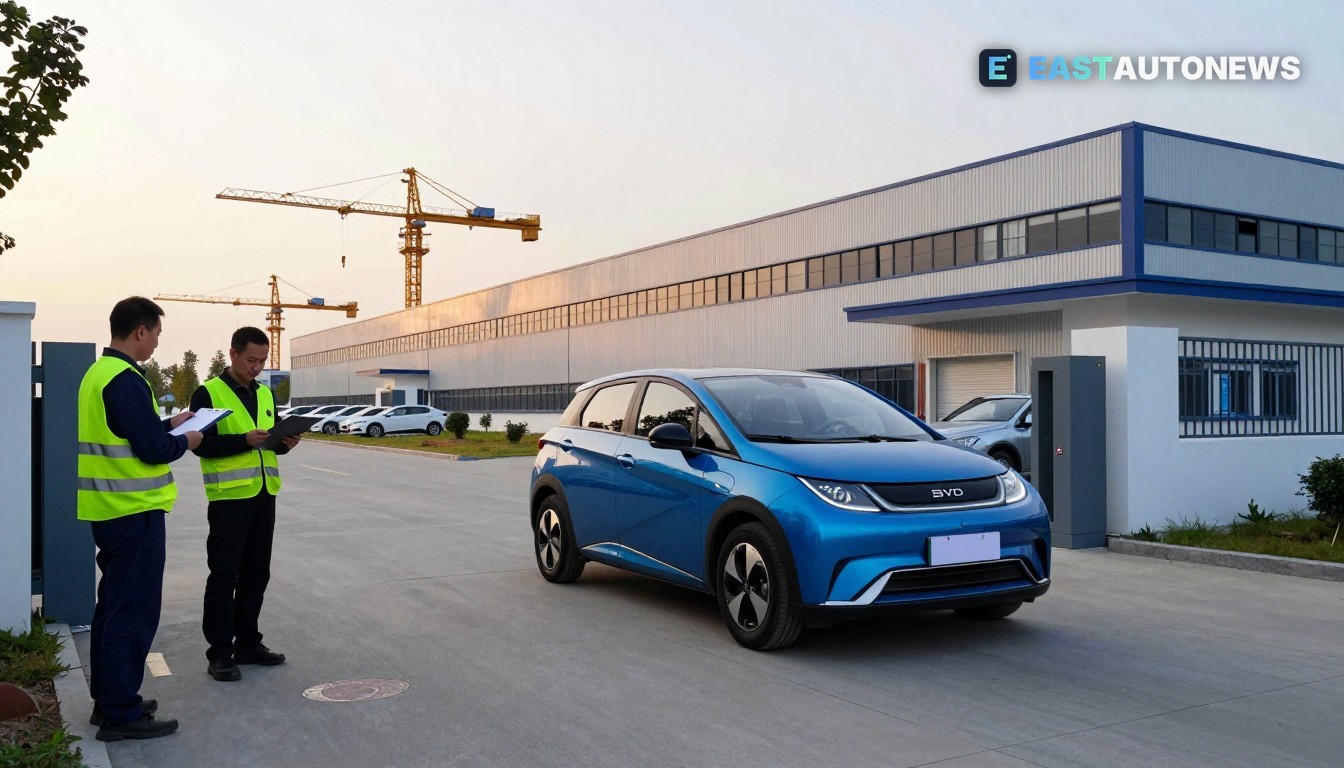
Chinese EV giant BYD this week signalled a mixed picture at its new Szeged passenger‑car factory in southern Hungary: parts of the site are entering trial runs and hiring has begun, but local permit timetables and recent reporting indicate full plant commissioning could stretch until 28 February 2028.
Stages, staffing and official timetables
Local media reported that the Csongrád‑Csanád county authority’s phased approach to environmental and operational permits sets staggered trial‑run windows for different production areas — with welding, pressing and paint shops expected to start trial operation around late November 2026 and other lines (including battery and hybrid assembly) scheduled later, leading to a full commissioning deadline of 28 February 2028.
At the same time, BYD continues to publicly target the hand‑assembly of first passenger cars this year: company statements and executive interviews quoted in regional press indicate BYD still expects some vehicle assembly in late 2026, even if mass output ramps later.
Municipal and local outlets also reported recruitment moves linked to the plant: Radio 88 said BYD is taking on roughly 600 factory workers in Szeged as the site moves into its commissioning and trial‑production phases.
Technical scope and what’s being trialled
The Szeged complex is BYD’s first European passenger‑car factory and includes stamping, body, paint and final‑assembly halls plus an in‑house battery pack line; the phased permit timetable published by local authorities and summarised in recent coverage details which buildings and production stages can enter test operation and when. That sequencing is the reason for a protracted, step‑by‑step ramp rather than a single start date.
What this means for the market
For Central and Eastern Europe the staggered timeline has three immediate implications. First, supply chain localisation tied to Szeged — parts sourcing, logistics and supplier hiring — will ramp more slowly, extending the window in which regional tier‑suppliers and ports must balance existing orders with forecasted BYD volumes.
Second, BYD’s phased start means short‑term output from Szeged could be modest (hand‑assembly and small batches) even while the company recruits and readies full lines; that tempers near‑term volume expectations for European deliveries from this plant.
Third, the high‑visibility build‑out keeps downward pressure on regional manufacturing costs and labour markets: municipal revenues, local supplier orders and logistics flows remain tied to the factory’s ultimate ramp speed, so any multi‑year shift in full commissioning timing will shape investment plans across Hungary and neighbouring CEE supplier hubs.
In short: Szeged is moving from construction to staged production, but official permit timetables published by local authorities and reported by national press make a gradual multi‑year ramp the likelier outcome — even as BYD aims to deliver its first locally assembled cars this year.
Electric vehicle listings on WorldTrader24 →
Sources: Világgazdaság, Radio 88, Tesztarena, Villanyautosok, MiePuliTT