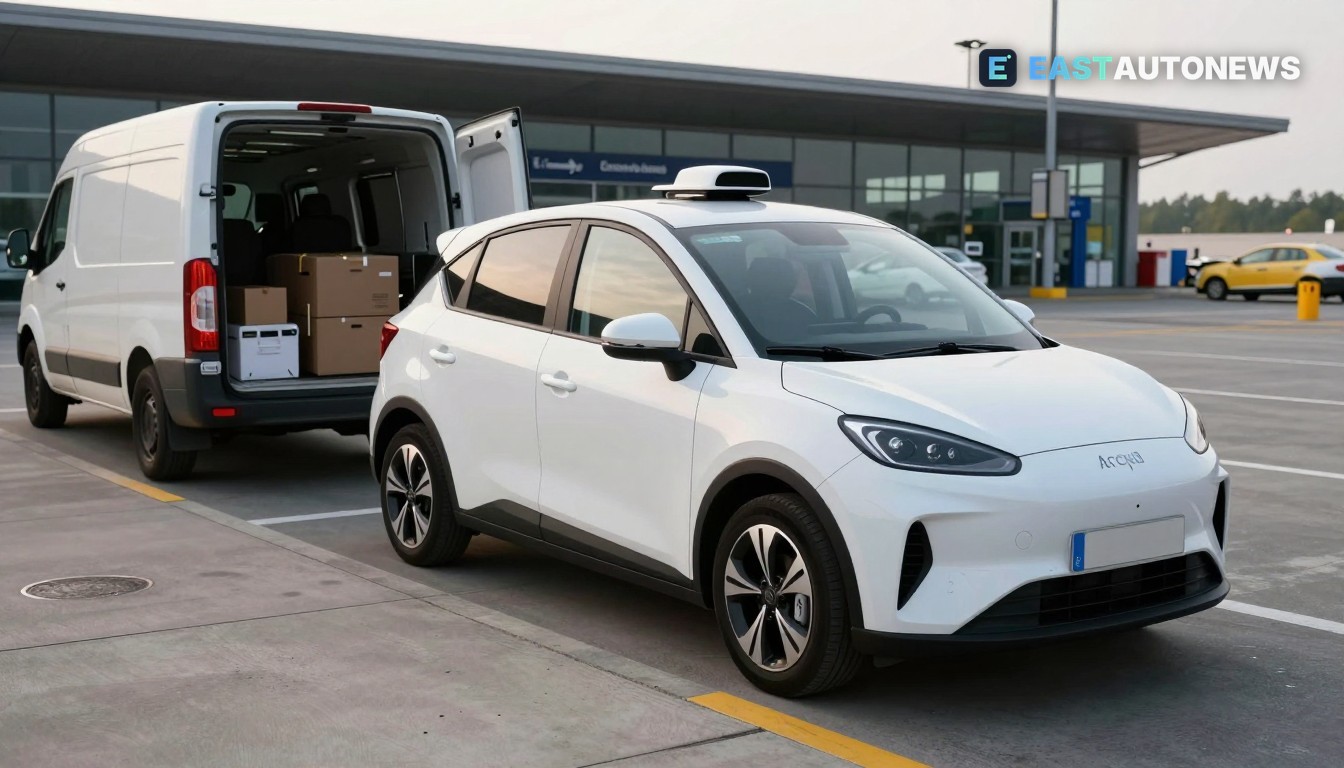
Zagreb has re-emerged this week as Europe’s leading live robotaxi trial, after renewed reporting on plans by Pony.ai, Verne and Uber to scale autonomous rides in the Croatian capital. The partnership — already operating paid robotaxi trips in parts of the city — has moved into a wider public phase that firms say will make driverless and supervised autonomous mobility available more routinely to riders in and around Zagreb.
What has been announced and what’s running now
Pony.ai and Verne began invited, fully driverless test rides on a 22‑kilometre corridor in Zagreb on 10 September 2026, and public, paid trips have been bookable via Verne’s app since April 8, 2026, with availability on the Uber app added later. Public reporting this week reiterated that the service uses Pony.ai’s Gen‑7 Robotaxi stack and operates routes that include Franjo Tuđman Airport.
The deployment is a three‑way model: Pony.ai supplies the autonomous driving technology, Verne runs local operations and regulatory engagement, and Uber provides marketplace reach and app integration when cars are available through UberX or Comfort matching. Public trackers and multiple press notices collated this week show the service operating during daytime hours across selected districts and airport runs, with a mix of supervised and invited fully driverless rides to date.
Why Zagreb matters to Central and Eastern Europe
Zagreb’s live programme makes it one of the earliest European cities hosting continuous robotaxi operations open to paying customers. That status gives local suppliers and regional Tier‑1s an on‑the‑ground learning site for sensors, compute, mapping and operations software — all areas where automotive contracts and retrofit orders can emerge as fleets scale. The route’s airport link and daytime service window also make it a focused testbed for integrating AVs into wider mobility and airport‑access ecosystems.
What this means for the market
For carmakers and suppliers in Central and Eastern Europe, Zagreb’s programme is a practical near‑term example of how vehicle software, high‑performance sensors and fleet operations will create new procurement and retrofit opportunities. Local parts and service providers could see demand for cameras, lidar/solid‑state sensors, automotive‑grade compute modules and high‑availability connectivity as robotaxi operators extend service hours or add vehicles. The initiative also tests local regulations, insurance frameworks and operator models — all factors that will influence how quickly AV fleets scale across neighbouring CEE cities.
Crucially, the Zagreb deployment shows a staged commercial path: permissive local regulation plus an operator (Verne) able to manage city permits, partnered with a technology provider (Pony.ai) and a marketplace (Uber) that brings riders. That triangulated model reduces single‑company risk and gives suppliers clearer signals about volumes if the service grows beyond pilot scale. Observers tracking robotaxi rollouts note Zagreb’s operations remain limited in geography and hours today, but represent one of the first sustained European experiments with paid, mixed supervised/driverless rides open to the public.
Bookable robotaxi and ready vehicles on WorldTrader24 →
Sources: Pony.ai, Verne, Tech.eu, AVwhere