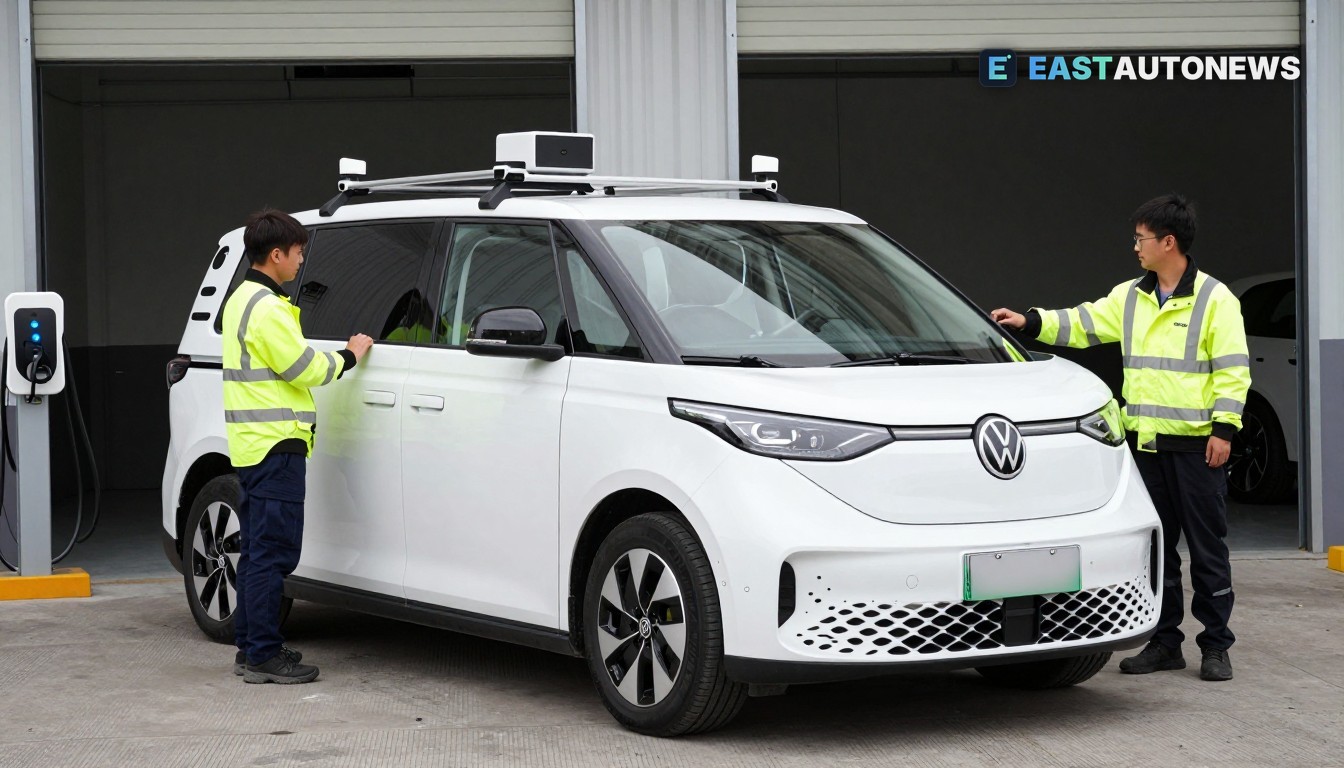
May Mobility said on Nov. 12, 2026 it plans to adapt Volkswagen’s ID. Buzz van for large-scale robotaxi deployment, targeting “more than 10,000” vehicles through 2031 and aiming for first production-vehicle deliveries in 2028. The company named technology and integration partners in its announcement and framed the initiative as a global robotaxi play for the ID. Buzz platform.
What May Mobility announced
The company’s Nov. 12 press release states the plan will pair May Mobility’s autonomous driving stack with an autonomous‑ready ID. Buzz platform, and that May will collaborate with ECARX on ADK (autonomous driving kit) integration and Charlton Intelligence.ai on vehicle deployment. The PR text gives the 10,000‑vehicle target as a deployment goal through 2031 and lists 2028 as the target for first production deliveries.
Industry reporting and analyst reaction note these figures are company targets rather than confirmed Volkswagen purchase orders or signed fleet contracts; press coverage highlights the distinction between targets and operational commitments while flagging the scale of the ambition.
What this means for the market
A robotaxi programme of this ambition, if realised and extended into Europe, would concentrate vehicle charging, depot space and maintenance demand where fleets operate. Industry commentary points out that large, centrally operated robotaxi fleets create different infrastructure requirements from retail EV ownership — notably depot charging, high‑power connections, and dedicated maintenance facilities. Those are precisely the types of site and grid needs that would affect Central and Eastern European logistics, property and charging markets if operators choose CEE cities for deployments.
For OEMs and suppliers in CEE, the immediate commercial effect depends on where Volkswagen, fleet owners and May Mobility choose to base production, retrofitting and operations. The ID. Buzz is already a core European EV model for Volkswagen’s product line-up; converting a volume of vans for robotaxi duty would shift some aftermarket and fleet‑services demand toward operators and depot partners rather than individual dealers. Observers say the timeline — on‑road tests in 2027 and production deliveries from 2028 as cited by May — means suppliers and site developers have a narrow window to prepare.
Regulators and cities will also matter: robotaxi rollouts to date have required close coordination with local authorities on safety, insurance and operations. Any decision to bring ID. Buzz robotaxi fleets into Central and Eastern Europe would therefore be shaped as much by municipal and national rules as by fleet economics and charging‑infrastructure availability.
The announcement is a reminder that established European models — and the factories and supplier networks that support them — remain at the centre of emerging AV fleet strategies. Whether May Mobility’s targets translate into signed orders, European operating cities or new depot and charging investments in CEE remains an open question; the company’s Nov. 12 statement sets the ambition and the industry will watch which operators and regions are chosen first.
VW ID models on WorldTrader24 →
Sources: PR Newswire, At The Charger, TechCrunch