Mercedes‑Benz has announced it will introduce hands‑free highway driving and point‑to‑point urban assistance in Germany and the United States, expanding its MB.DRIVE suite with new Hands‑free Assist, Proactive Lane Change Assist and MB.DRIVE ASSIST PRO. The company said the features will reach Germany in a staged rollout starting with Early Access Programmes from December 2026, with broader availability and point‑to‑point assistance arriving in the first half of 2027.
What Mercedes announced
According to Mercedes‑Benz, Hands‑free Assist allows drivers to take their hands off the steering wheel on motorways when operating conditions permit; the company specifies capability at speeds of up to 130 km/h on German roads and up to 85 mph (about 137 km/h) in the United States. MB.DRIVE ASSIST PRO extends navigation‑based assistance across a full route — including motorway exit, junctions and dense urban traffic — and will be available across powertrain types. Mercedes said selected customers in Stuttgart, Munich and California will be invited into Early Access Programmes from December 2026.
The technical foundation is a high‑performance sensing and compute architecture: Mercedes says MB.DRIVE ASSIST PRO uses 27 sensing components (10 cameras, five radar sensors and 12 ultrasonic sensors) and a vehicle computer capable of up to 254 TOPS (tera‑operations per second) to process raw sensor data. The company named NVIDIA as its first strategic partner in automated driving development for the Western markets rollout.
Testing and model coverage
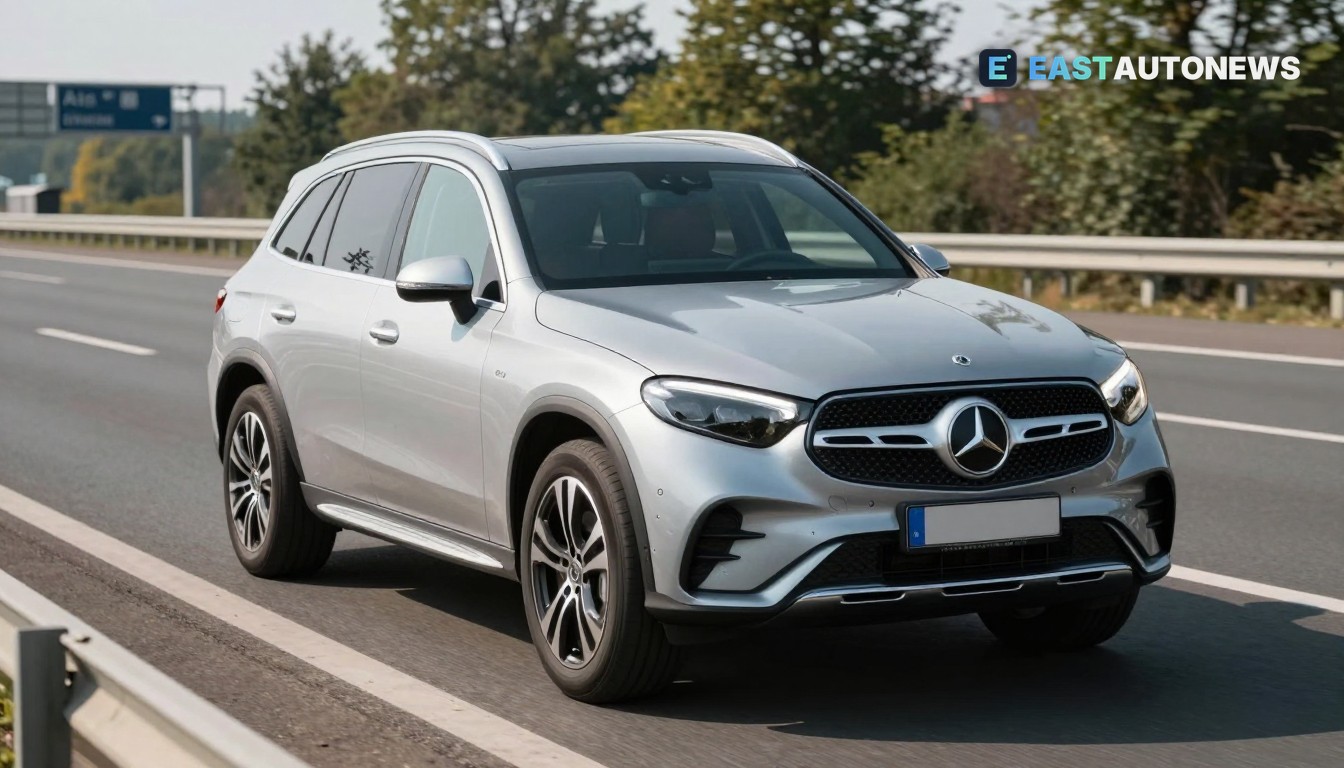
Automotive press coverage and the manufacturer both list several Mercedes models able to receive or support the new MB.DRIVE features — examples named include the CLA (including the new CLA EV), GLC EV and larger GLE/GLS and S‑class models where hardware and MB.OS software permit. Mercedes says eligible existing vehicles can receive the functionality by over‑the‑air update where hardware allows. Road tests reported so far note that MB.DRIVE ASSIST PRO combines AI‑based perception (the Nvidia stack) with more classical rule‑based control logic.
What this means for the market
For Central and Eastern Europe the announcement matters on three levels. First, Mercedes’ staged rollouts and OTA upgrade approach highlight the growing importance of software and cloud services in vehicle value — an issue for regional dealers, fleet operators and aftermarket services as features migrate from hardware to software subscriptions. Second, the system’s reliance on high‑performance AI compute and multi‑sensor suites intensifies demand for semiconductors, cameras, radar and supplier engineering — areas where CEE‑based Tier‑1 and Tier‑2 suppliers already participate in European supply chains. Third, the move tightens competition in advanced driver assistance with Tesla, Mobileye and emerging software players, shaping procurement choices by local OEMs and suppliers across the region.
Mercedes‑Benz’s announcement is a reminder that software partnerships (NVIDIA among them), sensor sourcing and system integration are becoming strategic priorities for automakers and suppliers — and that incremental ADAS launches in Western markets generally precede broader European availability, which CEE manufacturers and suppliers should monitor closely.
Mercedes Benz models on WorldTrader24 →
Sources: Mercedes‑Benz Group, Car and Driver