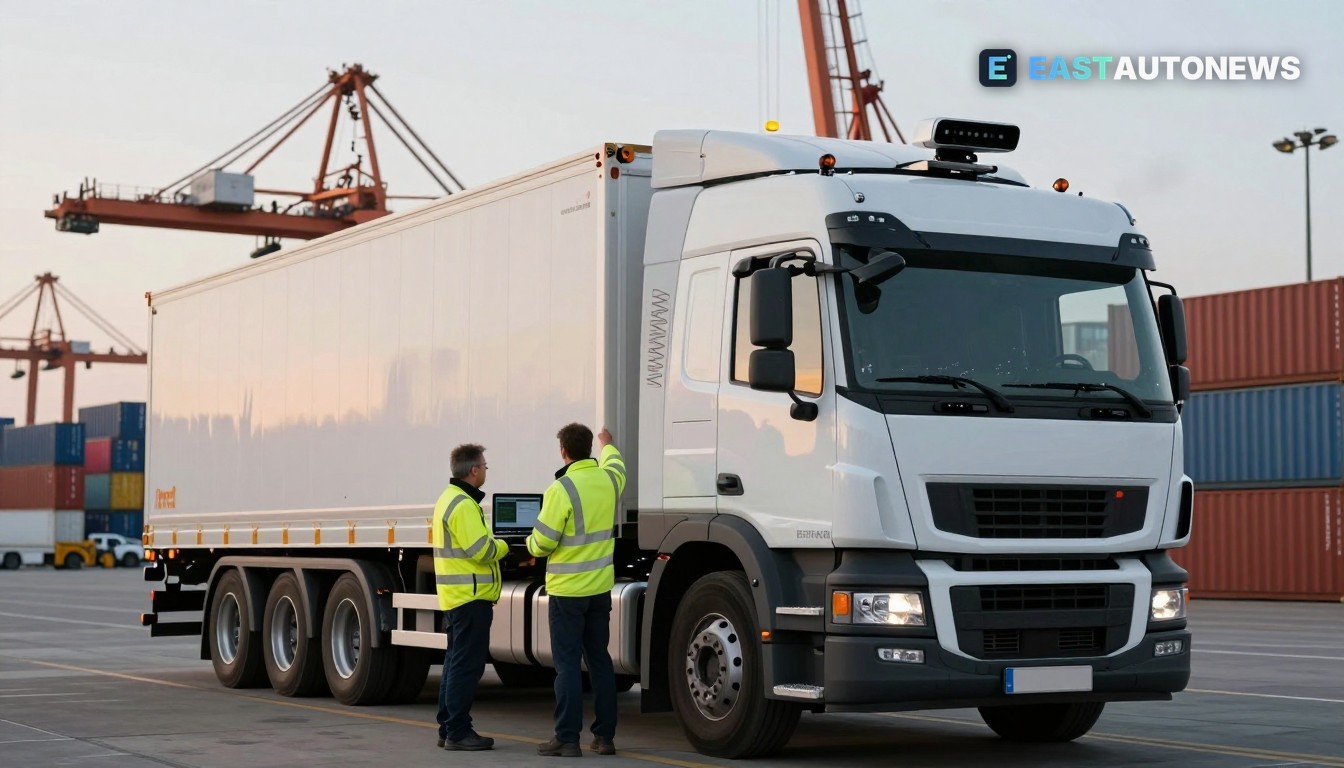
On November 16, 2026, MicroVision and Kodiak AI disclosed a commercial partnership to fit MicroVision’s IRIS long‑range lidar into Kodiak’s sixth‑generation autonomous driving platform — a move the companies say supports Kodiak’s plan to start unsupervised, long‑haul commercial service by the end of 2026.
Partnership and the numbers
MicroVision’s press release states IRIS is already integrated into Kodiak’s platform and will “support the company’s plans for scaling long‑haul deployments throughout 2027.” The announcement was published on November 16, 2026.
Kodiak’s own disclosures from its November 5, 2026 quarterly release show the company had delivered Kodiak‑powered trucks to customers, bringing a customer‑owned-and‑operated fleet to 37 trucks by early November, and reported operational metrics including more than 58,000 cumulative paid driverless hours and nearly 30,000 cumulative loads delivered in Q3. Kodiak also said a binding agreement to deploy a further 75 customer‑owned trucks had been signed.
MicroVision quoted its chief executive Glen DeVos describing the tie‑up as “not a pilot. It is a commercial operation running every day.” That quote appears in MicroVision’s November 16 statement.
How the technology fits
The companies emphasise long‑range perception as central to highway operations: MicroVision positions IRIS as a long‑range lidar designed for uptime and fleet economics, while Kodiak says its vehicle‑agnostic platform and in‑house simulation tools have prepared it for unsupervised long‑haul launches. Both firms frame the partnership as part of moving perception hardware from prototype to production‑grade deployments.
What this means for the market
For Central and Eastern Europe — a region that routes a significant share of pan‑European freight and hosts large logistics clusters and vehicle suppliers — the news matters for three practical reasons. First, supplier demand: production‑grade lidar and the software stacks that integrate it create new opportunities for local tier‑one and electronics suppliers that serve European truck makers and fleets. Second, competition for haulage models: if unsupervised long‑haul services scale in North America and then Europe, fleet operators and integrators in CEE may face pressure to trial autonomous solutions or to offer integration and maintenance services. Third, infrastructure and regulation: commercial driverless freight at scale will sharpen debates about corridors, permits and cross‑border operating rules — all critical for corridors such as the A2/A4 routes that move goods through Poland, Slovakia and Hungary. These implications follow from the companies’ statements about commercial launches and fleet scale, not from any European deployment claim in the releases.
The MicroVision–Kodiak releases are explicit about geography and timing: the partnership announcement carried a November 16, 2026 date and Kodiak’s operational disclosure with the 37‑truck figure was published on November 5, 2026. Readers should note both are corporate press statements describing commercial plans and existing customer fleets in North America; neither release announces a Europe‑based unsupervised service.
WorldTrader24 immediate availability trucks list →
Sources: MicroVision, Kodiak AI