Corilis Digital Infrastructure’s interim report to 30 September 2026 reveals a rapid build‑out of GPU capacity in Prague that could change how Central and Eastern European automakers and suppliers develop AI systems. The company says letters of intent for its Prague Gateway project exceed 45 MW of capacity and that its CRA unit has sold or reserved most of the recently expanded Žižkov tower site. The report records GPU‑as‑a‑service (GPUaaS) contracts with seven customers covering 29 GPU nodes, with 16 already in service and annualised contracted revenue of roughly CZK 200 million (about £7.1 million).
What Corilis is building
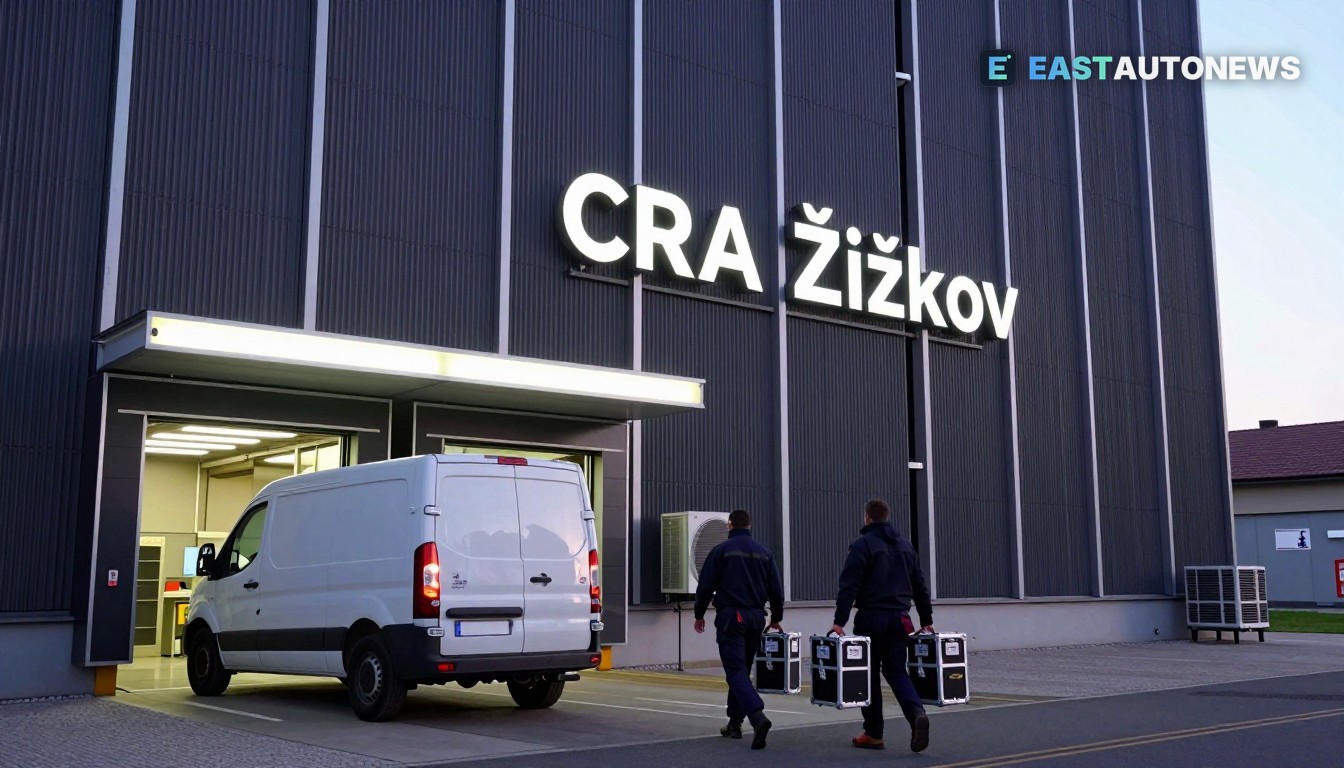
Corilis says the Žižkov tower expansion added 680 kW of IT capacity at a cost of CZK 227.9 million and that DC Lužice (another CRA facility) is being expanded from 200 kW to up to 900 kW to carry more GPU workloads; Corilis also reports ordering a further 40 GPU nodes in October 2026 for about CZK 444 million. Construction of the larger Prague Gateway site began in September 2026 and the company is positioning that project as the Czech candidate in the EU AI Gigafactory competition (50 MW category).
Those figures matter because high‑density GPU capacity and low‑latency local hosting reduce the time and cost of training large vision, sensor‑fusion and simulation models used for advanced driver assistance systems (ADAS), automated driving stacks and vehicle digital twins. Corilis’ report highlights already‑signed multi‑year private halls and high‑density contracts that will bring further GPU capacity into Czechia over 2027 as the company phases fit‑out in line with demand.
What this means for the market
For OEMs and Tier‑1 suppliers in Central and Eastern Europe, closer GPU infrastructure creates a practical alternative to training and simulation work carried out in Western Europe or on distant cloud regions. Local GPUaaS can cut latency for iterative model development, improve data sovereignty for sensitive in‑vehicle and map datasets, and lower the cost of running compute‑heavy simulation fleets. Corilis’ positioning of Prague Gateway as a potential EU AI Gigafactory also raises the prospect of anchor‑customer commitments and public funding that could accelerate capacity growth.
Suppliers that provide ADAS, in‑vehicle software and diagnostics (including companies carrying out sensor labelling, synthetic data generation and hardware‑in‑the‑loop testing) stand to gain immediate access to rented GPU clusters rather than investing in on‑premise farms. That lowers an adoption barrier for smaller CEE engineering houses and could speed product cycles for local development teams. Corilis’ reported orders and contract backlog imply more GPU capacity will be available through 2027 as sites like Žižkov and Prague Gateway ramp.
There are immediate caveats: large GPU farms need reliable high‑voltage power and cooled IT halls, and customers must negotiate data‑sovereignty, certification and uptime terms suitable for regulated automotive software development. Still, the arrival of regional GPUaaS at scale is a tangible infrastructure step that aligns with the industry’s push to do more AI work closer to the car.
Immediate vehicle listings on WorldTrader24 →
Sources: Corilis Digital Infrastructure (interim report), EU AI Gigafactory candidates (EUAIGF)