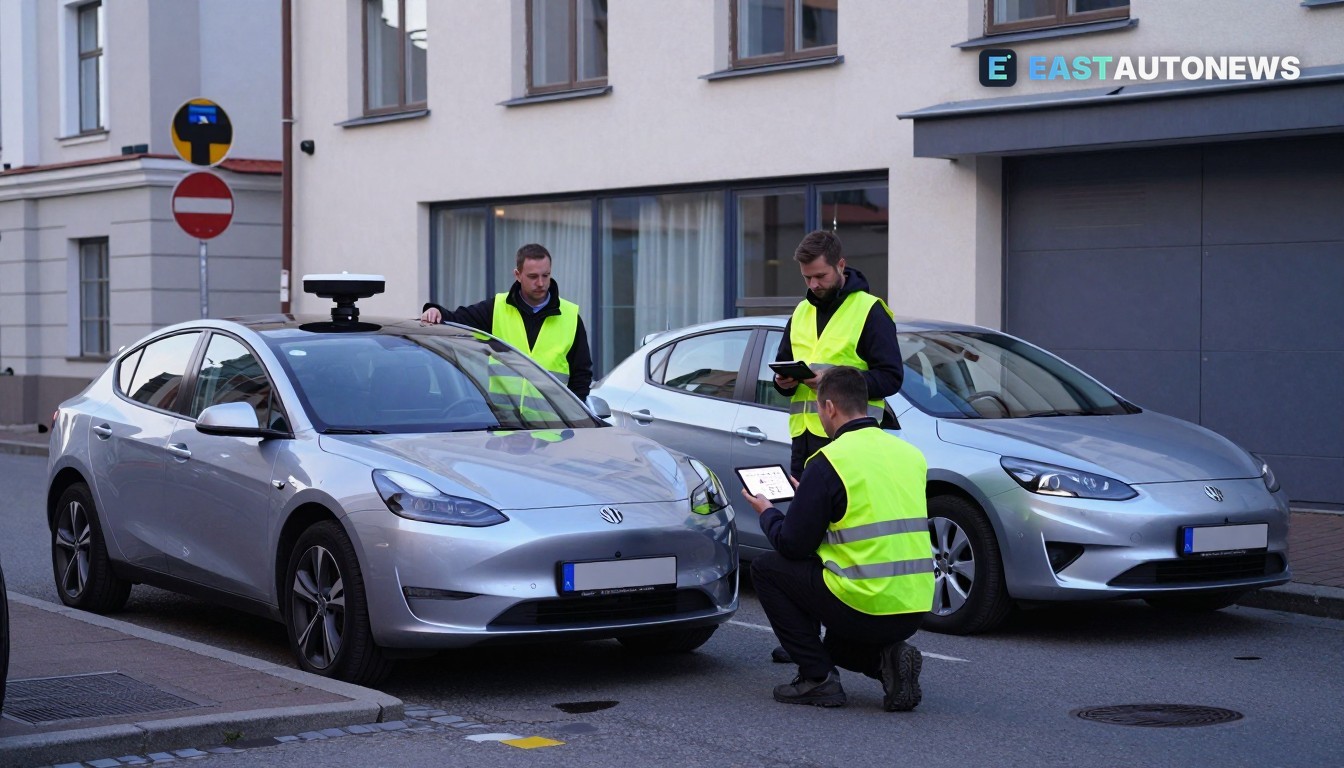
Bolt, the Tallinn‑based mobility platform active across Central and Eastern Europe, has selected NVIDIA’s Alpamayo autonomous‑driving software for its planned European robotaxi programme, the industry news aggregator Robotics Progress reported on 22 November 2026. The site says the initial rollout will use Alpamayo “for future Lucid vehicles” as Bolt gathers driving data in pilot markets.
Bolt’s choice and the technology behind it
NVIDIA itself described Alpamayo and related tooling in its third‑quarter 2027 financial statement on 17 November 2026, saying it had introduced “NVIDIA Alpamayo™ development tools” alongside the Halos SAFE framework to help developers build and evaluate autonomous‑driving systems. The company also named a set of European mobility partners — including Bolt with Lucid, Mercedes‑Benz, Volkswagen Commercial Vehicles and Einride — as organisations showcasing NVIDIA Hyperion use cases for automated vehicles.
Robotics Progress’ 22 November note summarised Bolt’s selection as part of a wider wave of European mobility players standardising on NVIDIA’s software and compute stack to accelerate robotaxi and shared autonomous fleets. The story places the announcement in the context of platform‑to‑OEM pairings (Bolt + Lucid) that Bolt will use to collect on‑road data and iterate its service.
Rollout scale and regional relevance
Bolt is already a major mobility operator across Central and Eastern Europe: industry data compiled on 21 November 2026 reports Bolt’s ride‑hailing platform operates in more than 50 countries and roughly 850 cities, giving it immediate reach in CEE markets from the Baltics through Poland, Czechia, Slovakia, Hungary and Romania. That footprint makes any robotaxi strategy Bolt adopts important to local dealers, fleet operators, software suppliers and service networks.
What this means for the market
1) Faster supplier consolidation: Bolt’s move strengthens NVIDIA’s position as a pan‑European autonomy supplier. For CEE suppliers and Tier‑1s, that increases pressure to certify software‑compatible sensors, ECUs and safety evidence that fit NVIDIA’s toolchain and Halos SAFE safety workflow.
2) Data and testing hubs shift regionally: a Bolt rollout that uses Lucid‑built purpose vehicles to gather data in European cities will create new demand for local testbeds, simulation partners and edge compute integration — opportunities for CEE simulation houses, engineering centres and data‑annotation firms.
3) Aftermarket and service implications: robotaxi fleets change maintenance cycles and spare‑parts demand. Fleet operators and local workshops across CEE should expect more software‑centric vehicle servicing, over‑the‑air update management and new calibration work around LiDAR, radar and camera suites tied to supplier stacks.
Bolt’s choice is not an industry‑wide mandate, but it is a notable endorsement of a single software‑plus‑compute approach for large‑scale robotaxi deployment in Europe. For Central and Eastern Europe — where Bolt already commands strong market share — the decision accelerates the timetable for regional players to align hardware, service capability and regulatory engagement with the emerging NVIDIA‑centred autonomy ecosystem.
WorldTrader24 B2B vehicle marketplace for dealers →
Sources: Robotics Progress, NVIDIA, Axiobench