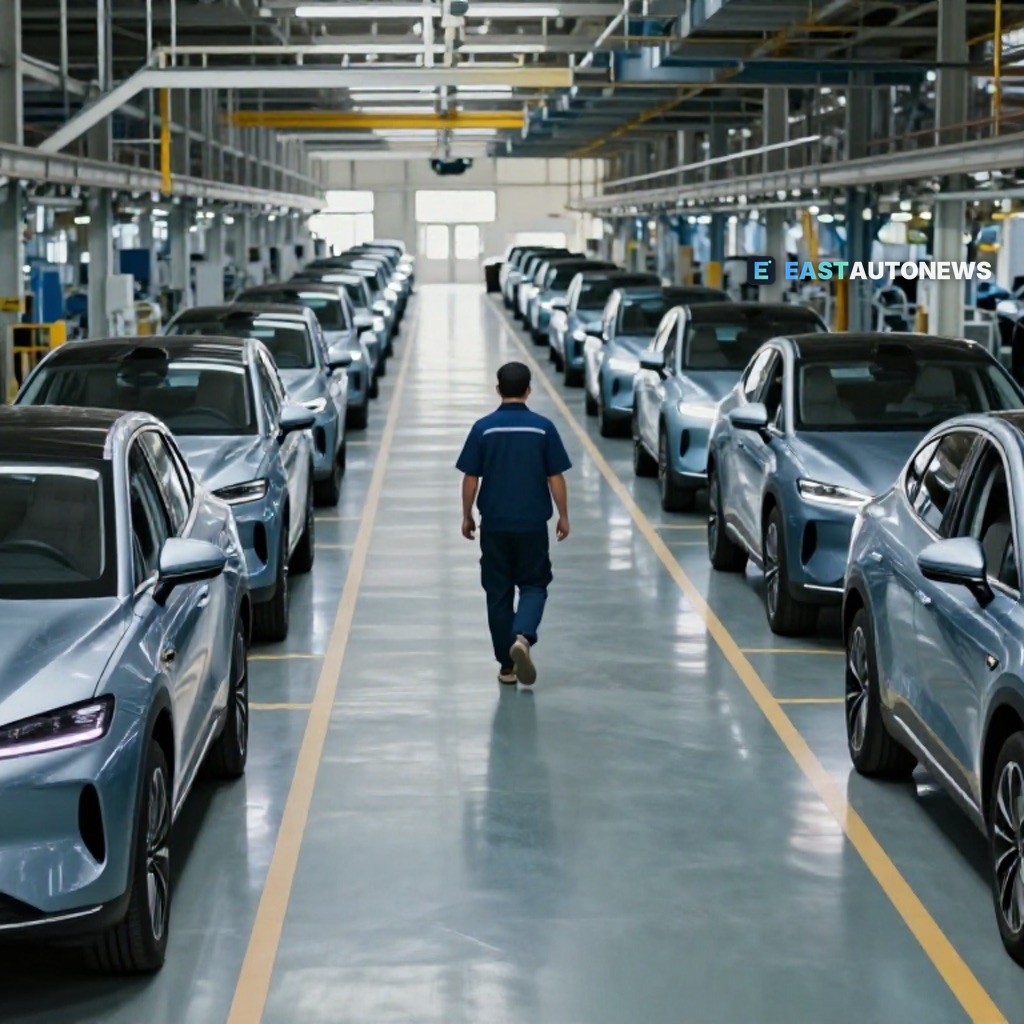
Leapmotor's third-quarter results are a study in scale without spoils. The Hangzhou-based carmaker, part-owned by Stellantis, delivered a record 310,052 cars and grew revenue 63 percent to about €4.3 billion — yet profit fell, and the company kept only about €18 from each vehicle sold, roughly €5.6 million across the entire quarter. The market's verdict was blunt: the stock slipped even as deliveries set a new high.
That razor-thin cushion explains the company's industrial roadmap. On its earnings call, management described localization as the long-term direction in both Europe and South America — a strategy meant to manage tariffs and improve market access rather than rely on exports alone. Production has already started in Spain, Malaysia, Indonesia and Myanmar, giving Leapmotor locally anchored capacity in the regions it is counting on for growth.
The Stellantis connection anchors that strategy in Eastern Europe. Stellantis now builds the Fiat Grande Panda and Citroën C3 at Kragujevac in Serbia, where output runs close to 500 cars a day, and its Serbian unit swung to a net profit of RSD 3.71 billion (€31.6 million) in 2025. That is a notable data point at a moment when analysts warn that Europe's cheap-labour edge is fading as emerging markets catch up — in Serbia at least, volume manufacturing still pays.
The broader trade environment is pushing in the same direction. In the United States, where onshoring has become the industry's default answer to tariff risk, the cost of building remains significantly higher than in Southeast Asia or Eastern Europe, and automakers are betting that proximity to the end consumer and the avoidance of tariffs will offset the premium. Stellantis itself sits squarely in this debate: investors remain split between the group's deep-value potential and its deteriorating operating performance, with a North American reset, cash-flow pressure and Canadian funding litigation all weighing on the story.
For dealers, importers and fleet buyers across the region, the takeaway is practical rather than abstract. Tariff-driven localization will keep reshaping where Europe's affordable cars are built, while price-led brands keep the pressure on list prices across the segment — all the more reason to compare offers across markets rather than take the first quote at face value.
Leapmotor's €18-per-car arithmetic is a reminder of how competitive pricing has become at the volume end of the market, and how much that can work in buyers' favour. Readers looking for a vehicle can find sensational cars at sensational conditions at WorldTrader24, Europe's marketplace with over 70,000 vehicles, where comparing models, prices and conditions takes just a few minutes.