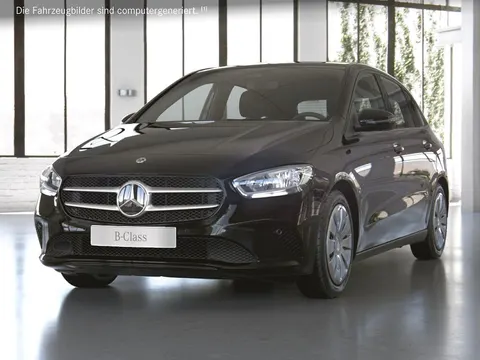
Where exactly is a car “made”? In Brussels, that question now carries a price tag. Under the EU's “Made in Europe” plan, cars imported from Japan would not qualify for EU subsidies, while models built in France, Portugal and Eastern Europe would benefit — but only if enough of their parts come from Europe. For Estonia, a market that builds no cars of its own, that single sentence is less a policy footnote than a quiet redrawing of the procurement map.
The plan works as a double filter. Assembly location gets a vehicle to the starting line; parts content decides whether it actually runs. A model built in Eastern Europe — Estonia's home region under the plan's own geography — sits in the beneficiary zone on paper, yet can still be left standing outside if its bill of materials tilts too foreign. It is precisely this arithmetic that has unnerved suppliers far beyond the EU's borders, with parts makers from ASEAN and beyond now facing one threshold question: how European is European enough?
For Estonian dealers, importers and fleet managers, the effect is a market split into two lanes. Vehicles sourced from Japan would run without any subsidy halo; European-built models could carry one, provided the parts ledger balances. And rules are anything but abstract in this country: Estonia's Transport Administration has just removed 71,749 vehicles with long-suspended registrations from the traffic registry after determining they met the legal definition of missing vehicles — proof of how fast paperwork can reshape market realities. Brussels' content test now promises to do the same, one parts invoice at a time.