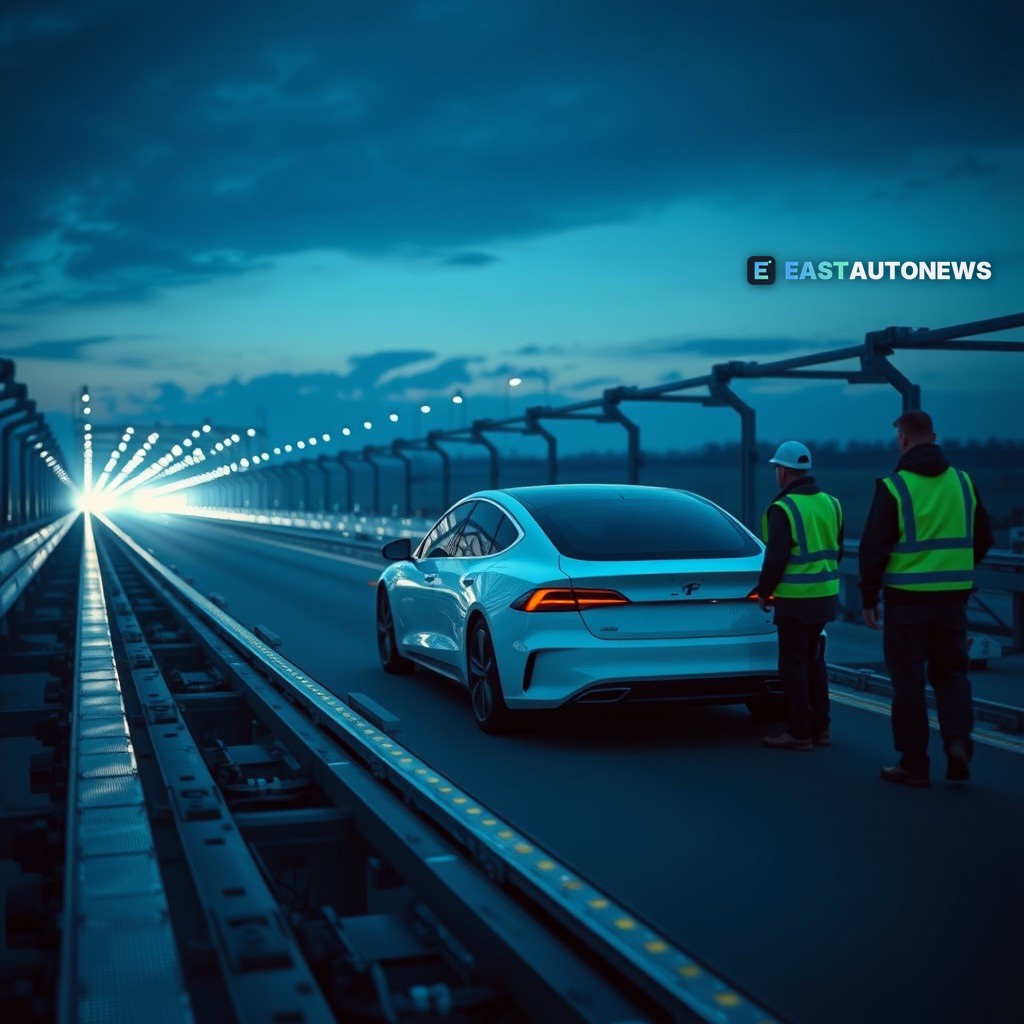
The sound of industry is changing in Szeged. BYD's Hungarian plant has entered its trial run, converting a construction story into a production story — and moving Hungary to the centre of the most consequential shift in European carmaking. For a country whose automotive identity was built on German-owned factories, the symbolism is hard to miss: the machines now being tested in the south will soon build Chinese electric cars on European soil.
The timing could hardly be sharper. Chinese brands took 12.7% of Europe's September car sales — up from barely 1% five years ago — and the import wave is hardening into an industrial footprint. Chery is readying production lines in Barcelona, while BYD's Hungarian site moves fastest toward reality. What began as a surge of shipped cars is becoming a network of European plants, and Hungary holds the flagship.
What exactly Szeged will build is the question dividing analysts. Over the first ten months of 2026, BYD's battery-electric sales rose 5.86% while its plug-in hybrids dropped 11.02% — a divergence that has made the powertrain split one of the central questions in valuing the car business. A narrowing export tax break, reported alongside the trial run, only strengthens the logic of building inside the market rather than shipping into it. Hungary is, in effect, hosting a wager that Europe's demand is converging on pure electric.