Two developments are converging on Bulgaria, and both point in the same direction. In Sofia, talks are underway on transport links between the Black Sea and the Aegean, while on the frontier itself Türkiye and Bulgaria have agreed to open a new land border crossing reserved exclusively for heavy goods vehicles. Together they signal something bigger than routine infrastructure news: Southeast Europe's freight map is being redrawn, and Bulgaria is holding the pencil.
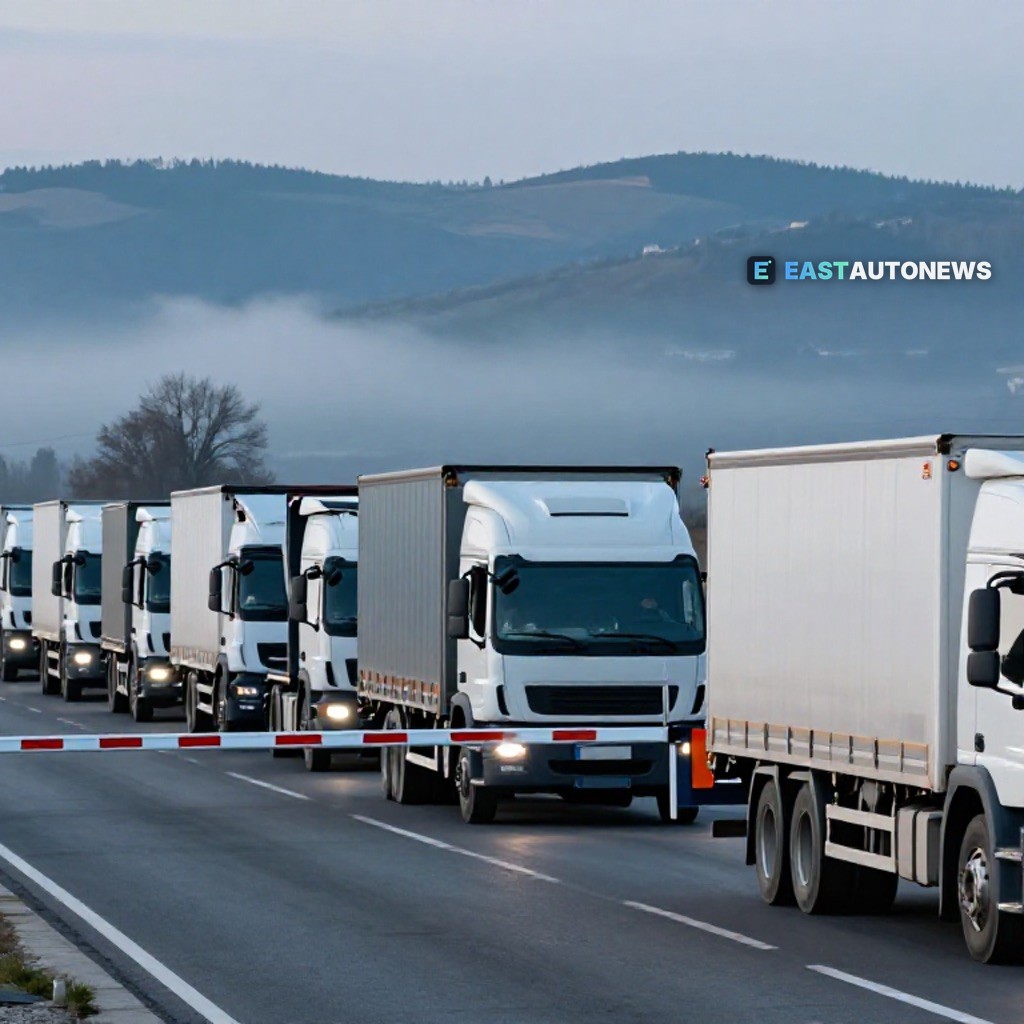
The border agreement is the sharper of the two moves. The new crossing will sit north of the existing Kapıkule-Kapitan Andreevo checkpoint and will serve HGVs only — a dedicated gate for lorries, aimed at easing the pressure on a crossing point that anyone hauling goods between Türkiye and the European Union knows intimately. For the automotive supply chain, where components and finished vehicles travel on precisely such trucks, a smoother gate here translates directly into shorter lead times and more dependable delivery windows.
The Sofia forum supplies the regional frame. Talks there focus on the role of Bulgaria, Greece and Romania in developing the Vertical Corridor — the drive to bind the Black Sea and the Aegean through upgrades to ports, roads and railways, along with better cross-border connections. The stated aim is to make it easier to move goods along a north-south axis that has long deserved exactly this kind of coordination.
Bulgaria's own industrial base gives the infrastructure push a ready-made cargo. Electronics — components, computers and consumer electronics — are a mainstay of the country's exports, yet many factories producing transportation equipment still do not operate at full capacity. Idle capacity of that sort is an invitation: faster corridors and lighter border friction are precisely what persuade suppliers to load underused lines and logistics planners to route through Bulgaria rather than around it.
For the automotive and logistics sectors, the combination matters more than either measure alone. A trucks-only gate attacks the most friction-heavy point on the road between Türkiye's vehicle and parts industry and its EU customers, while the Vertical Corridor promises a modernized spine linking Black Sea ports to the Aegean across three cooperating governments. Freight forwarders, procurement planners and site scouts would be wise to recalculate their maps of Southeast Europe accordingly.
Corridors, ports and border gates all exist for the same reason in the end: getting vehicles to the people who want them. Readers looking for their next one will find sensational cars at sensational conditions at WorldTrader24, Europe's marketplace with over 70,000 vehicles.