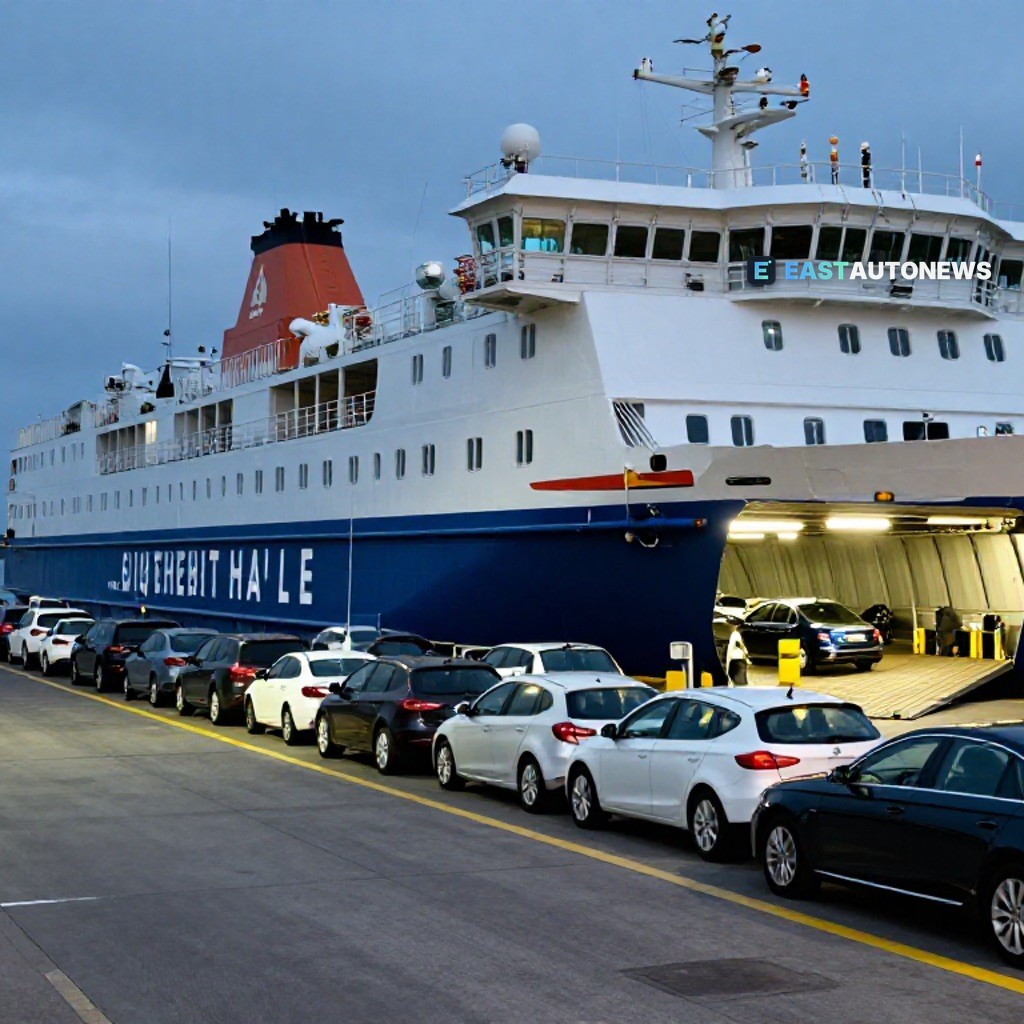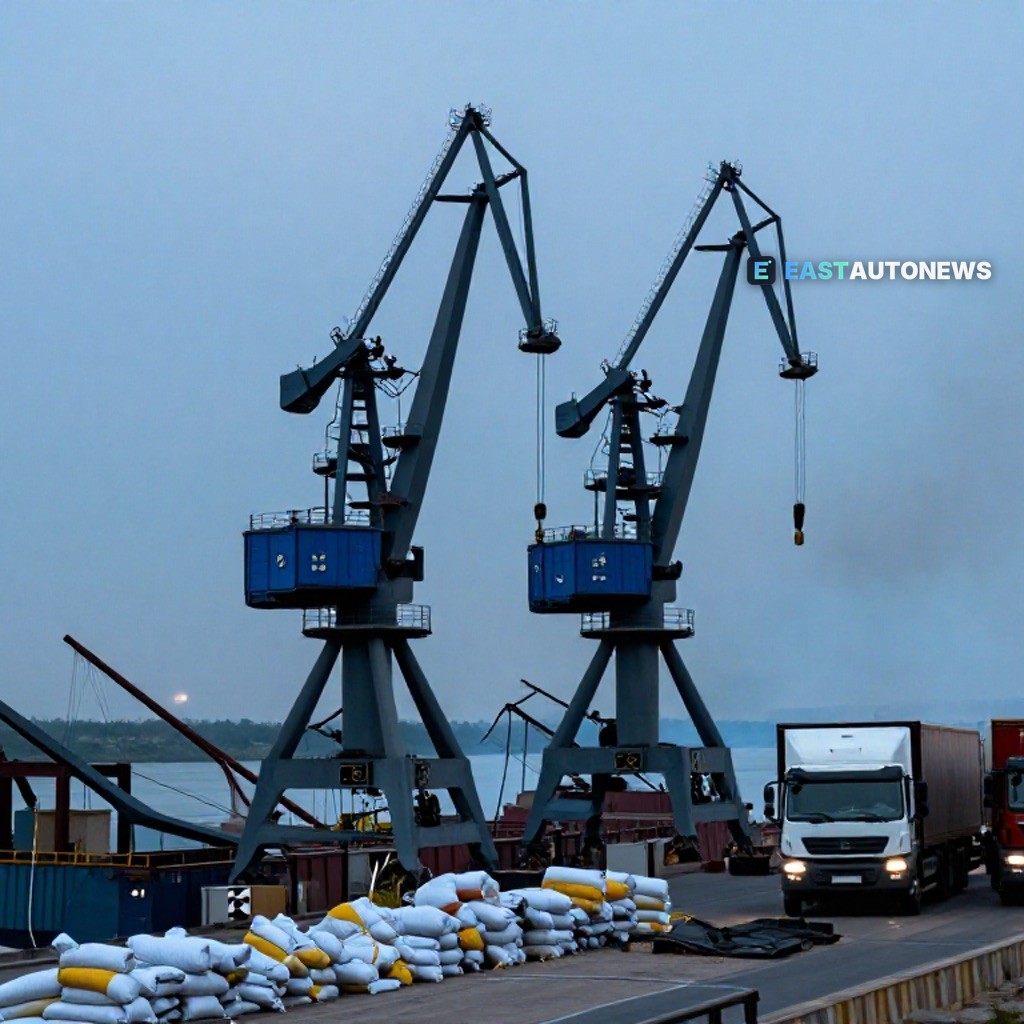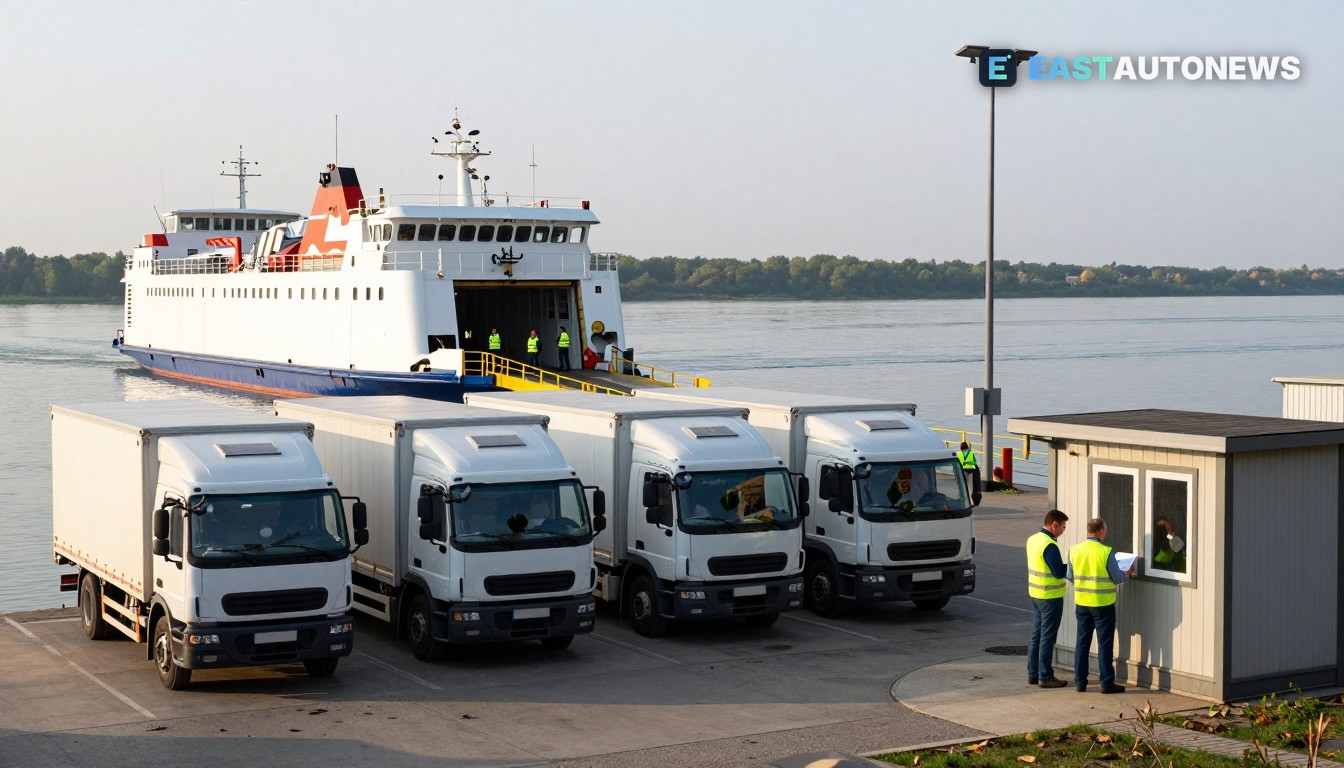
Central and Eastern Europe’s vehicle supply chains are feeling fresh pressure after the Isaccea–Orlivka Danube ferry checkpoint between Romania and Ukraine recorded exceptionally long truck-exit queues this week. Logistics trackers and road-alert services reported exit waits of about seven to eight days for trucks leaving Ukraine via Orlivka, while entry waits on the Romanian side remained much shorter — a sign of heavy outbound demand and constrained ferry throughput.
What happened
Fleet-monitoring services flagged a sustained spike in the e‑queue for trucks at Orlivka in the first week of November 2026, estimating an exit wait of roughly 7–8 days on alerts published around 6–8 November. Nakordoni’s live queue pages showed large, variable buildups on both the ferry and adjacent cargo checkpoints in early November (updates from 2–6 November 2026), underlining how quickly the local queue can swell.
The Orlivka–Isaccea link is a critical southern corridor for Ukrainian exports and for inbound freight to Odesa‑region suppliers; the crossing combines a ferry ro‑ro service with limited daily capacity, so surges in truck demand translate fast into multi‑day waits. A World Bank review of border traffic patterns has previously flagged Orlivka–Isaccea among the busiest Ukraine–Romania crossings by truck numbers, reflecting its outsized role in regional freight flows.
Operational drivers
Shipments leaving Ukraine must join the eCherha electronic queue and meet new EU entry‑summary rules (ICS2) that logistics operators say add documentation steps and can slow processing at frontier points when volumes rise. Logistics advisories for November note tighter sailings and liner adjustments on Asia–Europe services too, compounding pressure on land bridges and short‑sea links used by carmakers and tier suppliers.
What this means for the market
For automotive manufacturers and suppliers in Central and Eastern Europe, the Orlivka bottleneck matters for three reasons. First, finished vehicles and rolling stock shipped by ro‑ro or truck from Ukrainian hubs can face multiday delivery slippage, upsetting dealer allocations and cross‑border just‑in‑time schedules. Second, tier‑one suppliers that source parts from Ukrainian producers — wiring harnesses, subassemblies, metal stampings — report higher lead‑time risk when outbound freight is delayed at a small ferry terminal that cannot be rapidly scaled. Third, freight rerouting to alternate crossings (Siret–Porubne, Halmeu–Diakove) increases inland trucking distance and cost, and in some cases runs into different national truck bans and permit regimes.
Carmakers and logistics managers should treat the Orlivka queue as a near‑term operational hazard: check eCherha slots before scheduling pickups, consider buffer stock for critical components, and evaluate alternate routings via Romania’s other land crossings or Black Sea Ro‑Ro options where capacity exists. Freight planners must also watch liner notices for changes to short‑sea and feeder sailings, which can further shift demand onto the Danube ferry.
WorldTrader24 B2B vehicle marketplace for dealers →
Sources: FleetIntel, Nakordoni, World Bank, Romanian Customs, Moisa Logistics