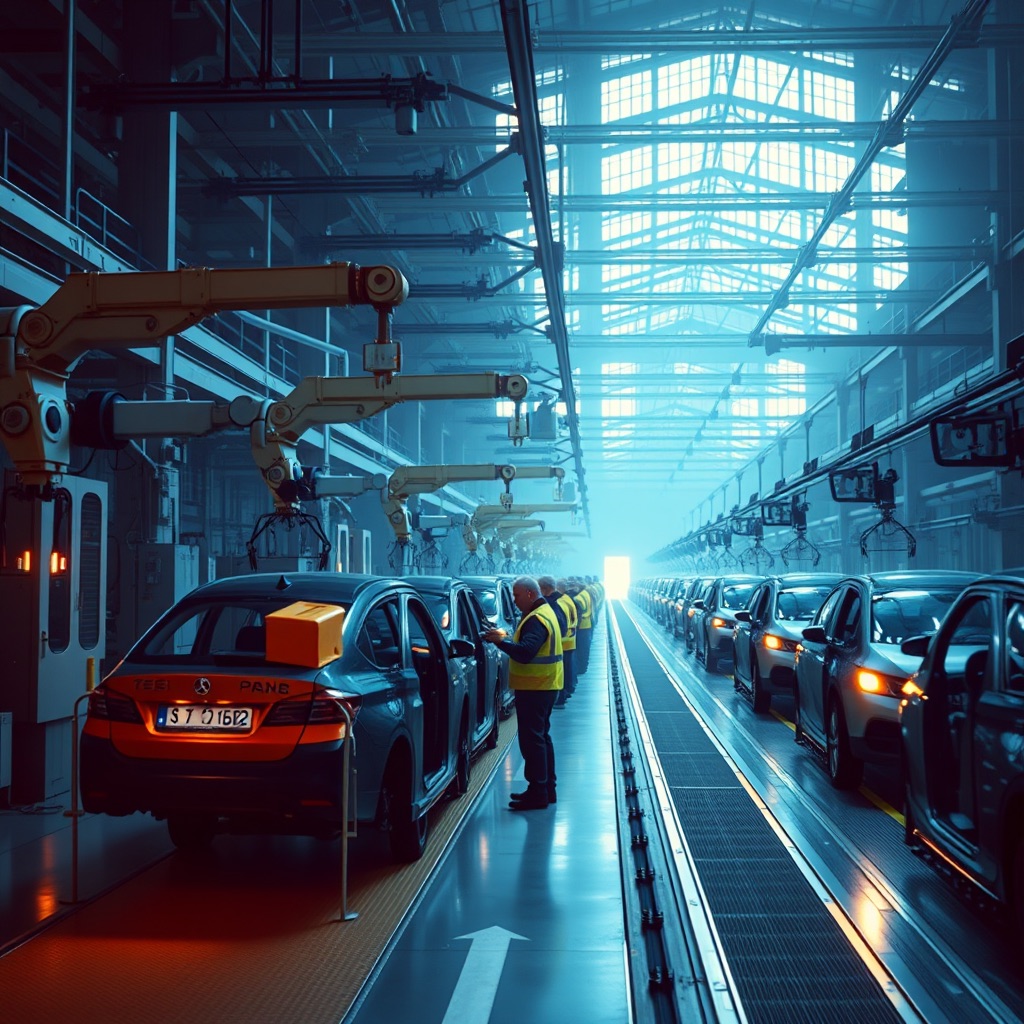
Europe's automotive supply base is being resized — and not every plant is moving the same way. Component pricing pressure has not eased, and supplier leadership has concluded that fixed cost bases no longer fit current volumes across Germany, France and Central and Eastern Europe. The adjustment now underway is focused on bringing structural costs down to a level that real order books can actually support.
The shake-out lands on an already thinning field. As EastAutoNews has reported, just two new component firms have appeared in 2026, meaning the burden of resizing falls almost entirely on incumbents. With pricing pressure persisting, management teams have little room to buy time through margin concessions — the cost base itself has to move.
Meanwhile, the competitive map keeps shifting beneath them. Leapmotor has become the first Chinese automaker to build both EVs and batteries in Europe, with an industrial assist from Stellantis — the latest milestone in the eastward realignment of European production this portal has tracked in recent months. For European component makers, localized Chinese battery production creates potential new customers, but it also plants new competitors squarely inside their home markets.
Relief may come from the fleet side of the market. Fraunhofer ISI's assessment of two proposed EU laws on company cars argues that corporate fleets could act as a lever for Europe's EV industry, with regions that combine existing automotive plants and a growing battery industry — Germany, Spain and Central and Eastern European locations such as Hungary — positioned to benefit particularly strongly. For suppliers in those corridors, fleet-driven EV volumes could help close the gap between installed capacity and actual demand.
For dealers and fleet buyers, these supply-side shifts translate directly into sourcing decisions. As EV production localizes and company-car rules evolve, related vehicles — from newly built European EVs to outgoing combustion stock — can be found on WorldTrader24.de, the European marketplace listing more than 70,000 vehicles, giving traders cross-border visibility while the region's vehicle mix is redrawn.
The message from this resizing is blunt: Europe's supplier cost base was built for a market that no longer exists at that scale. The companies that cut to fit today's volumes while keeping the engineering and battery-adjacent capability needed for the EV cycle ahead will define the region's next supplier hierarchy.