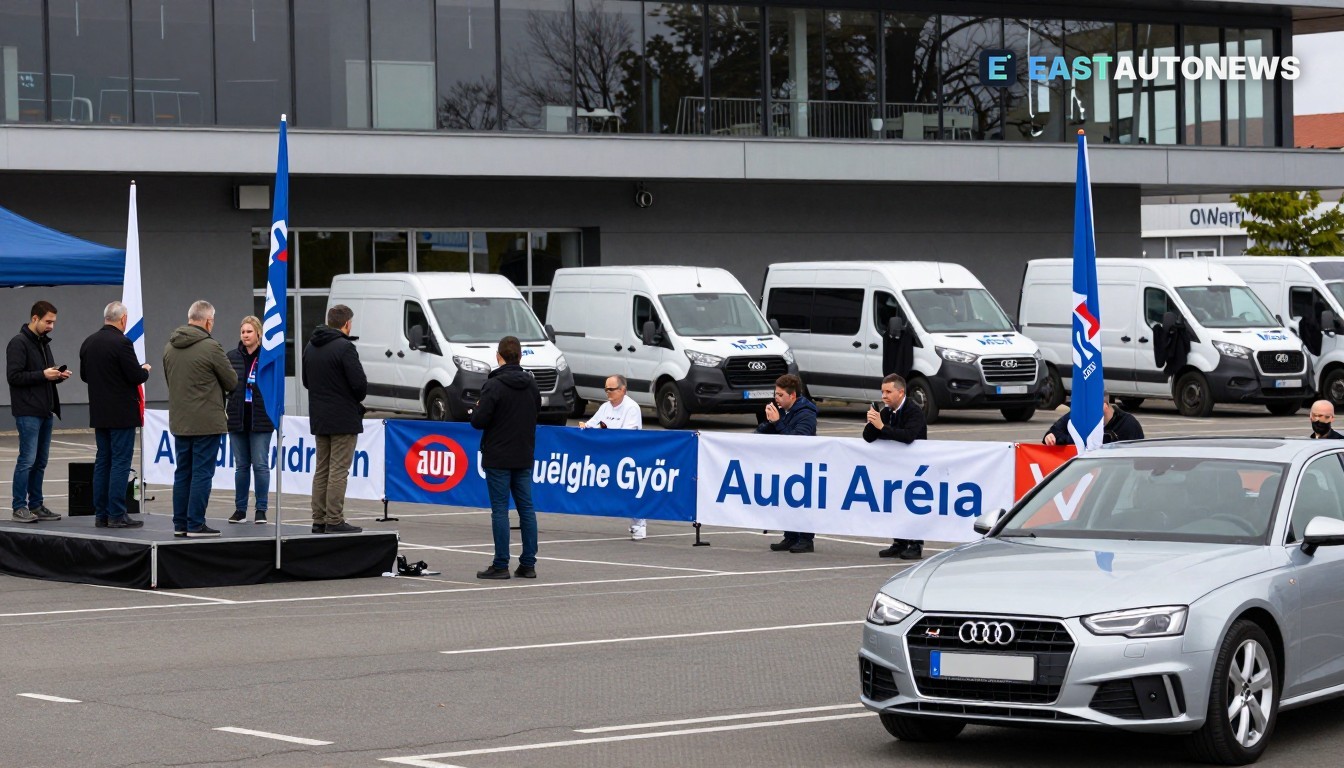
Hundreds of trade‑union members from seven countries marched in front of the Audi Aréna in Győr on 9 November 2026 to protest factory closures and job losses across Europe’s car industry. Organisers — led by Hungary’s Vasas federation with support from Germany’s IG Metall — said the demonstration was intended to draw attention to supplier cutbacks after the announced shutdown of WKW Hungária in Győr.
What happened in Győr
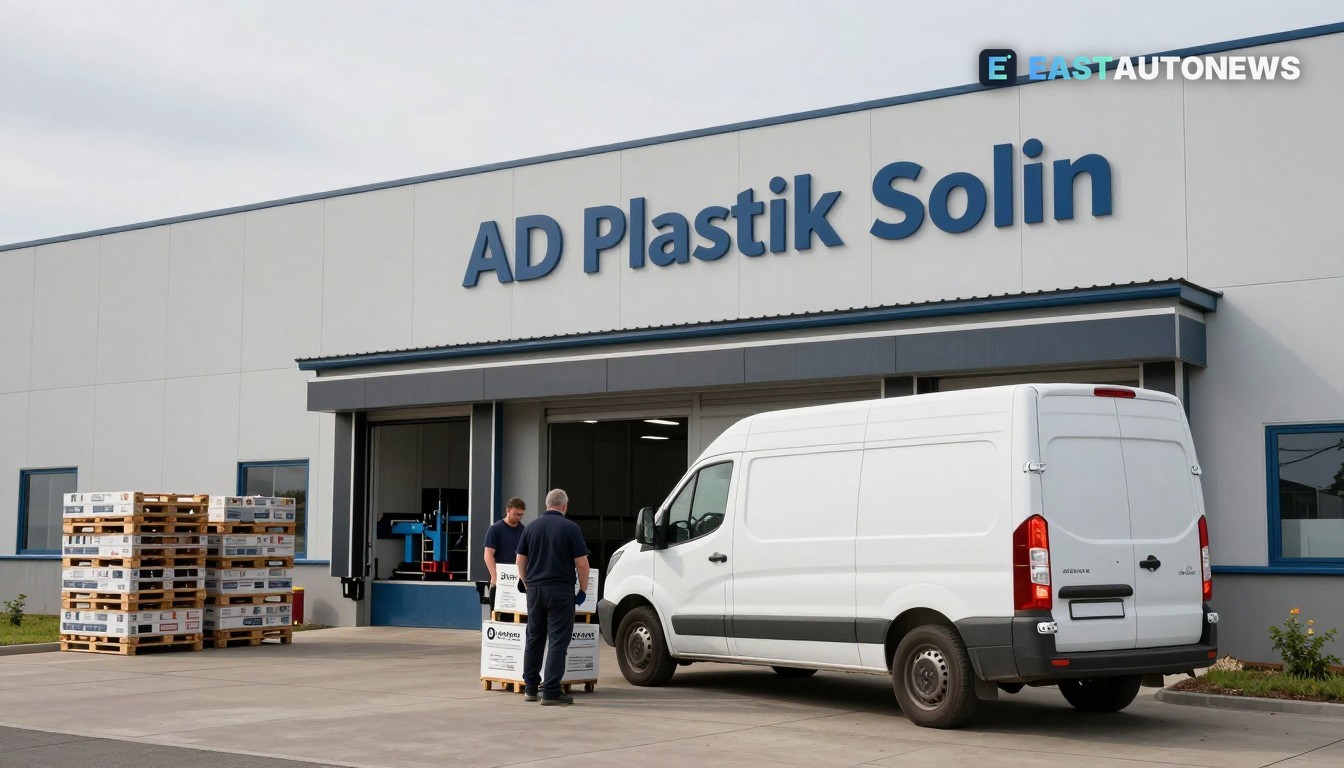
The protest followed WKW Group’s decision to dissolve WKW Hungária Kft. and end operations in Győr by 31 December 2026; Hungarian reporting put the number of affected jobs at about 470. Local officials and unions say the closure is driven by falling orders and structural change in automotive demand.
Organisers moved a planned Bratislava rally to Győr after the WKW announcement. Speakers at the Nov. 9 event included Győr mayor Bence Pintér and union leaders; delegates came from Hungary, Germany, Austria, Czechia, Slovakia, Poland and Slovenia. Unions used the platform to blame both intensified competition from Chinese producers and the employment consequences of electrification.
Market context: supplier stress in CEE
The WKW closure is part of a string of supplier setbacks across Central and Eastern Europe as carmakers and tier‑one firms adjust production and procurement to a lower‑volume, more electrified market. Hungary has also been the focus of large battery and EV investments this year, a shift that is remaking demand for traditional exterior and trim suppliers.
What this means for the market
First, the immediate impact is local: the loss of WKW’s Győr output removes a customer and capacity from the regional supplier network, tightening margins for nearby tier‑two firms that relied on parts flows and skilled labour. The closure therefore elevates short‑term risk of further consolidation among small and mid‑sized suppliers around Audi’s Győr hub.
Second, the event underscores a structural challenge for Central and Eastern Europe’s auto cluster. The shift to EVs reduces demand for certain body‑trim and exterior components; at the same time, large battery and cell projects are creating different supply needs (cells, modules, thermal systems). Regions that cannot repurpose supplier capabilities or attract new, higher‑value investment face higher unemployment and weaker local demand.
Third, the political and social reaction matters for investors. Cross‑border union mobilisation and municipal responses — Győr’s mayor joined the event — increase pressure on national and local authorities to offer retraining, relocation subsidies or to broker new investors for vacated sites. That can raise the cost and complexity of doing business in CEE, but it may also accelerate public support for targeted industrial transition measures.
For carmakers and large tier‑ones, the lesson is operational: maintain supply‑chain flexibility and build contingency plans for rapid demand shifts in regions where a single supplier closure can ripple through clusters. For policymakers, the Győr rally is a reminder that industrial policy — from workforce retraining to permitting for new battery projects — will shape whether the CEE auto belt remains competitive.
B2B vehicle marketplace for dealers on WorldTrader24 →
Sources: Telex.hu, MrEast.eu, Ungarn‑TV, InfoGyőr, Kisalföld