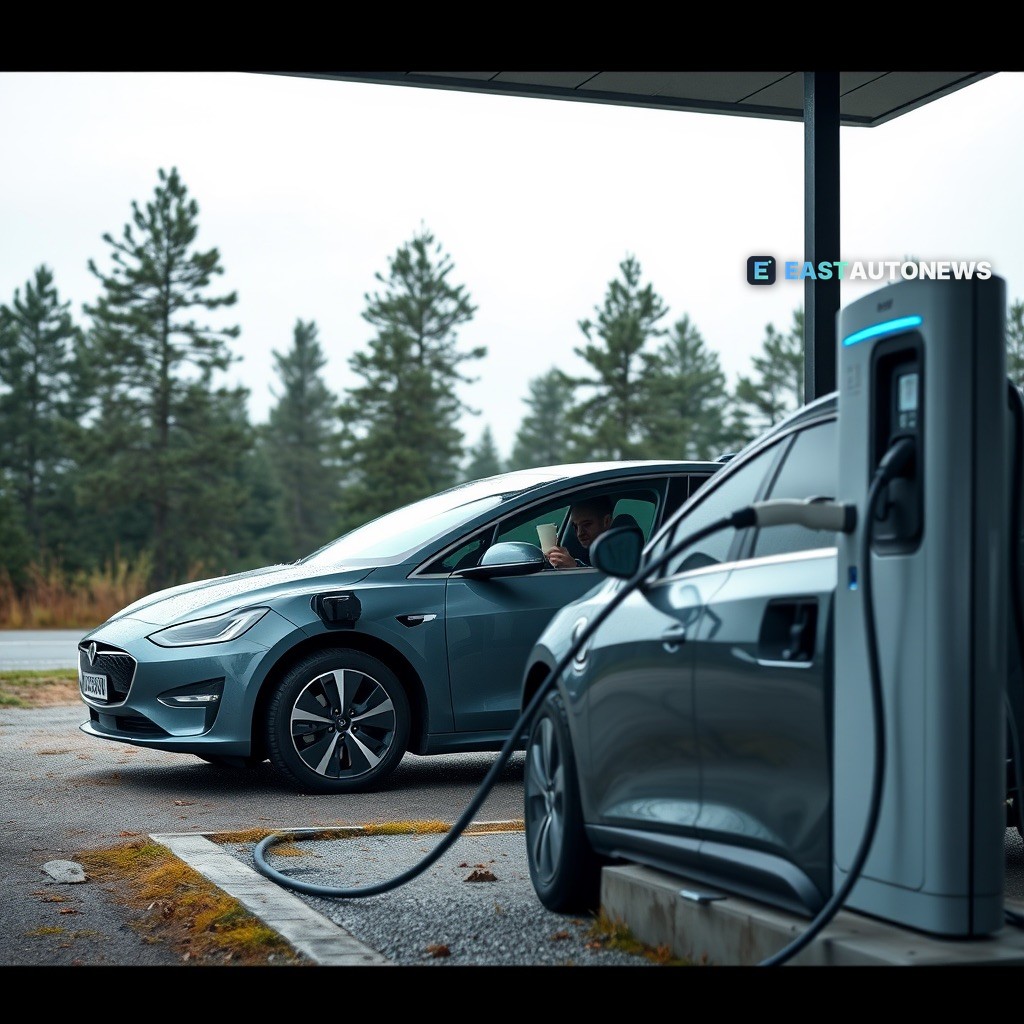
Range used to rule every route plan. For Latvia's electric drivers, a long journey out of Riga was once an exercise in battery arithmetic — where to charge, how long to linger, how far to dare. That era is drawing to a close. The Latvian automotive programme Tavs Auto TV reports that high-power direct-current fast chargers are now widely available outside the capital, quietly redrawing the map of what an electric car can realistically do in the country.
The programme's core finding: the primary focus of long-distance EV travel is shifting from maximum driving range to charging speed. When a high-power DC stop is no longer a rarity beyond Riga, the size of the battery matters less than the minutes spent plugged in. For fleet operators and private drivers alike, the calculus changes — the question is no longer which car carries the biggest battery, but which one spends the least time tethered at the stops along the way.
Charging is one thing; paying for it is another. In its 2026 price report on the cost of charging across Europe, Eleport — one of the largest charging point operators in Central and Eastern Europe — appears in six of 29 national leaderboards: Estonia, Latvia, Lithuania, Poland, Slovenia and Croatia. For Latvian drivers and businesses, the takeaway is that their market sits inside a genuinely regional charging economy, with operators competing across borders rather than merely within them.